Content
Ask anyone who has spent a shift beside a rotary kiln and they will tell you the same thing: you do not linger near the burning zone. The exact number, though, depends on what you are measuring. The flame, the gas stream, the clinker bed and the steel shell are all living at very different temperatures at the very same moment.
At the hot end of a modern dry-process cement kiln, the flame core runs at roughly 1,800–2,000°C (3,270–3,630°F). The clinker material passing beneath it sits at about 1,450°C (2,640°F). The gas leaving the burning zone is somewhere between 1,700°C and 2,000°C. From there, the numbers fall away quickly: around 900°C in the calciner, 350–400°C at the top of the preheater tower, and under 100°C for clinker leaving the cooler.
So the short answer is about 1,450°C in the material and up to 2,000°C in the flame. The longer answer, which matters far more when you are selecting a burner or troubleshooting a kiln, is a profile rather than a single figure.
A cement kiln is not uniformly hot, and treating it as one temperature is where a lot of operating confusion begins. Raw meal enters the top of the preheater tower at ambient temperature and is progressively heated as it falls against rising gas. By the time it reaches the burning zone it has been dried, preheated, and chemically transformed. What most people mean when they ask how hot a cement kiln is, is the burning zone — but the surrounding stages tell you how efficiently you got there.
| Kiln stage | Gas temperature | Material temperature | What happens there |
|---|---|---|---|
| Top preheater cyclones | 300–400°C | 250–350°C | Drying and preheating of raw meal |
| Calciner | 900–1,050°C | 850–900°C | Limestone breaks down into lime and CO₂ |
| Transition zone | 1,200–1,400°C | 1,000–1,200°C | Heat transfer to the bed; first liquid phase appears |
| Burning zone | 1,700–2,000°C | 1,400–1,500°C | Alite forms and clinker nodules grow |
| Grate cooler, first chamber | Cooling air heated to 1,000–1,200°C | Falls to 100–200°C | Recuperation of secondary and tertiary air |
One number worth holding on to: the kiln shell itself, on the outside, rarely exceeds 350–400°C in good condition. Everything between the flame and the shell is managed by refractory brick, coating, and the cooling air you control.
The target temperature is not a tradition, it is chemistry. Around 1,280–1,330°C, a liquid phase begins to form in the raw meal. That liquid is what allows the clinker minerals to rearrange themselves into the compounds that give cement its strength — primarily alite (C₃S), with belite (C₂S), tricalcium aluminate and ferrite alongside it. Alite formation really gets going in the 1,400–1,450°C window. Below that, you simply do not get enough of it.
In practice, the burning zone behaves like a narrow corridor:
That is why experienced operators talk about a burning zone temperature window rather than a setpoint. A swing of 50°C in either direction changes brick life measurably.
The flame is hotter than the material it heats — that is the whole point of a kiln burner. An adiabatic flame temperature of 1,900–2,100°C gives you enough radiant heat to push the bed to 1,450°C without melting the charge. How much of that flame energy actually lands in the bed depends on flame shape, primary air momentum, secondary air temperature, and how well the burner matches the kiln's diameter and production rate.
A long, lazy flame spreads heat over more brick and less material. A short, intense flame concentrates heat right under the burner, which raises the local shell temperature and shortens refractory life. Getting this balance right is the single largest lever most plants have over burning zone temperature.
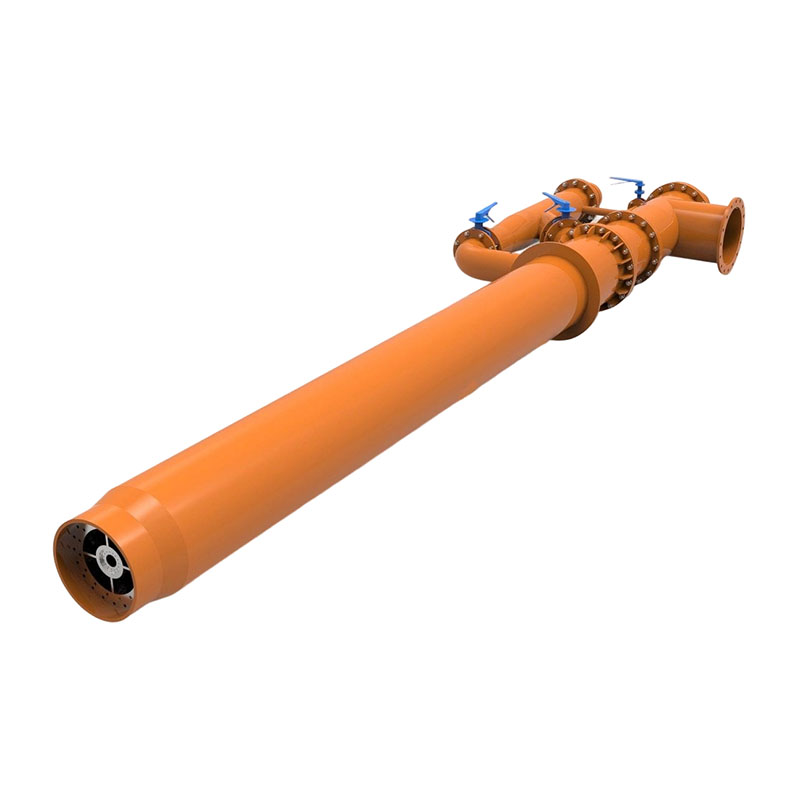
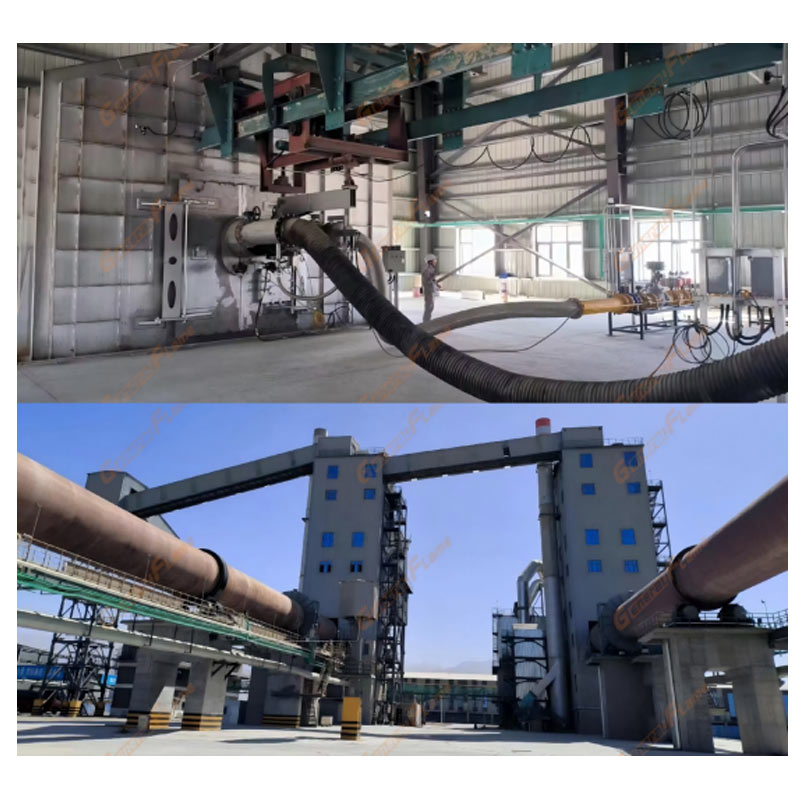 GeneralFlame ALVS Adjustable Rotary Kiln BurnerA patented multi-fuel burner with adjustable Laval nozzle and swirl generator for precise flame length and width control in rotary kilns.View Product →
Our rotary kiln burners are built around adjustable flame shape precisely because no two kilns want the same flame. Being able to shift the flame length without shutting down is the difference between a stable burning zone and a daily fight.
Measurements matter more than intuition here. A kiln camera looking directly at the burning zone, a shell scanner, and continuous gas analysis give you three independent views of the same event. Oxygen and NOx trends often warn you about a temperature drift before the thermocouple in the kiln shell does.
When NOx becomes the constraint rather than temperature, burner design starts doing double duty — staging combustion to hold the flame cooler in the primary zone while still delivering enough heat overall. There is more detail on how that trade-off works in our low-NOx rotary kiln burner guide.
As plants substitute coal with biomass, refuse-derived fuel or waste-derived fuels, the burning zone temperature question gets harder. Alternative fuels usually arrive wetter, coarser and more variable in calorific value than coal. Burn them badly and flame temperature sags, free lime rises, and the kiln starts chasing its own tail. Burn them well — with proper fuel preparation, air staging and a burner that can co-fire several streams at once — and the burning zone looks exactly the same as it always did.
 Multiple Fuel Co-combustion Burner for Rotary KilnsA multi-channel burner for simultaneous or sequential firing of natural gas, oil, biomass, or coal powder, with adjustable axial and swirl airflow.View Product →
Co-combustion burners let you keep the clinker temperature steady while the fuel mix moves underneath you, which is what most substitution projects actually need.
Clinker leaves the burning zone at around 1,450°C and must be cooled quickly, both to preserve the crystal structure and to recover heat. A grate cooler does two jobs at once: it drops the clinker to roughly 100–200°C, and it returns hot air — secondary and tertiary — back to the kiln and calciner at 1,000–1,200°C. If the cooler underperforms, the kiln loses combustion air temperature, the flame cools, and the burning zone has to work harder for the same clinker.
 GeneralFlame Grate Cooler for Cement ClinkerIndustrial clinker cooling equipment with fixed and moving grates, staged air supply, and heat recovery that returns hot secondary and tertiary air to the kiln.View Product →
A burning zone at 1,450°C with a stable coating can run for a year on the same brick. The same kiln with a wandering flame and thermal cycling can eat that lining in months. Most of the refractory failures we are called in to look at are not caused by the temperature itself — they are caused by changing it too often or too fast. Every unscheduled stop and restart puts the brick through a full thermal cycle.
We have supported kiln combustion work across cement, lithium, nickel and metallurgical lines, and the pattern repeats: plants that control the flame control the temperature, and plants that control the temperature control their maintenance budget. A selection of those installations is collected in our project references.
Typically 1,800–2,000°C at the flame core, with adiabatic flame temperatures a little higher. The visible flame ends well before the clinker does, but the radiating heat carries down the burning zone.
Yes — the gas in the burning zone and the flame itself routinely do. The clinker never does, because it would destroy the phases you are trying to make and damage the lining.
Refractory brick plus a sintered coating insulate the steel, and the shell is cooled externally by air. A hot spot on the shell is a signal that the lining has thinned, not that the process is running hot.
So, how hot is a cement kiln? Around 1,450°C where it counts, up to 2,000°C where the flame burns, and far cooler than either one at the shell. If you are working on a kiln where those numbers have drifted, or you are planning a fuel change that will push the burning zone harder, we are always happy to talk through what has worked on similar installations.


 OEM/ODM High-Performance Combustion & Thermal Equipment Manufacturers
 English
 русский
 Français
 Español
 عربى