Content
A Low-NOx burner is a combustion device engineered to minimize the formation of nitrogen oxides (NOx) during fuel burning. It achieves this by controlling flame temperature, staging the introduction of air or fuel, and optimizing the mixing process — typically reducing NOx emissions by 30% to 80% compared to conventional burners. In industrial applications such as rotary kilns, cement plants, power boilers, and petrochemical heaters, Low-NOx burners are the primary hardware solution for meeting stringent environmental regulations without sacrificing thermal efficiency.
NOx is a collective term for nitric oxide (NO) and nitrogen dioxide (NO₂). These gases are regulated globally because they contribute to ground-level ozone formation, acid rain, and fine particulate matter (PM2.5). In the European Union, the Industrial Emissions Directive (IED) and the Best Available Techniques Reference Document (BREF) for cement manufacture set NOx limits at 200–500 mg/Nm³ (at 10% O₂). In the United States, the EPA's National Emission Standards for Hazardous Air Pollutants (NESHAP) and state-level rules under the Clean Air Act impose comparable or stricter thresholds. Achieving compliance without expensive post-combustion systems (SCR/SNCR) in many cases requires replacing legacy burners with modern Low-NOx designs.
Understanding why Low-NOx burners are necessary requires a detailed look at NOx formation chemistry. There are three primary mechanisms, each requiring a different suppression strategy:
Low-NOx burner design targets all three mechanisms simultaneously. In rotary kiln applications, the greatest challenge is suppressing thermal NOx while maintaining the high flame luminosity and heat flux needed for clinker or lime quality. The design paradox is that high product quality demands intense heat transfer, while NOx regulations demand moderated flame temperatures — a contradiction that advanced multi-channel burner technology is specifically designed to resolve.
Modern Low-NOx burners employ several overlapping combustion engineering strategies, often combined within a single burner body to achieve compounding NOx reductions:
The total combustion air is split into primary, secondary, and sometimes tertiary streams delivered at different axial positions along the combustion chamber. The initial fuel-rich primary zone operates at a sub-stoichiometric air-to-fuel ratio (λ < 1), which suppresses peak flame temperature and limits oxygen availability for thermal NOx formation. The remaining air is introduced progressively downstream to complete burnout. This technique alone can cut thermal NOx by 40–60%. In rotary kilns, the kiln's own secondary air drawn from the clinker cooler (at 900–1,000°C) functions as a natural air-staging mechanism when primary air is kept low.
A secondary fuel stream — typically 10–20% of total heat input — is injected downstream of the primary combustion zone into an oxygen-deficient reburn zone. In this reducing environment, hydrocarbon radicals react with already-formed NO to produce molecular nitrogen (N₂) and water vapor. The process achieves additional NOx destruction of 50–70% in well-designed systems. Reburning is particularly effective for controlling fuel NOx and is commonly integrated with coal-fired kiln burners co-processing alternative fuels.
Cooled exhaust gases (typically at 200–350°C) are recirculated from the flue back into the combustion air stream or directly into the flame zone. The inert gas mass dilutes oxygen concentration and absorbs heat, reducing the adiabatic flame temperature by up to 150–200°C. Internal FGR rates of 10–30% are standard in industrial gas and oil burners. External FGR requires additional ductwork and fans but offers more precise control. In combination with air staging, FGR can reduce NOx to levels below 30 mg/Nm³ on natural gas-fired burners — qualifying as Ultra-Low-NOx (ULN).
Running the burner at minimal excess air reduces the total oxygen available for thermal NOx formation. Modern Low-NOx burners are designed for tight process controls, keeping excess air in the range of 1–5% at the kiln inlet, compared to 10–15% in legacy designs. LEA operation also reduces specific heat consumption and flue gas volume, providing a secondary benefit of lower CO₂ emissions per tonne of product. However, insufficient excess air risks CO formation and incomplete combustion, requiring precise oxygen measurement and control loops.
In applications using natural gas or LPG, lean premix burners homogeneously blend fuel and air before ignition, achieving a uniformly lean flame with peak temperatures well below the thermal NOx threshold. ULN premix burners can achieve NOx outputs below 9 ppm (approximately 17 mg/Nm³), meeting the most stringent air quality regulations in California (SCAQMD Rule 1146) and comparable global standards. These burners are not suitable for rotary kilns due to flashback risk and low heat flux, but they are widely used in industrial boilers, dryers, and process heaters.
| Burner Type | NOx Reduction vs. Baseline | Typical Application | Fuel Types |
|---|---|---|---|
| Air-Staged Burner | 30–60% | Boilers, furnaces | Gas, oil, coal |
| Fuel-Staged (Reburn) Burner | 50–70% | Power generation | Gas, pulverized coal |
| FGR Burner | 40–50% | Process heaters | Natural gas, LPG |
| Rotary Kiln Multi-Channel Burner | 30–80% | Cement, lime, minerals | Coal, gas, oil, AFR |
| Ultra-Low-NOx (ULN) Premix Burner | 70–90% | Industrial heating | Natural gas |
| Flameless Oxidation (FLOX) Burner | 80–95% | High-temp furnaces | Gas, hydrogen blends |
Among these, Flameless Oxidation (FLOX) — also known as High-temperature Air Combustion (HiTAC) — deserves special mention as an emerging technology. By preheating combustion air above the fuel's auto-ignition temperature (typically above 800°C) while diluting it with recirculated flue gas, FLOX eliminates visible flame formation and achieves remarkably uniform temperature profiles. This makes it ideal for heat treatment furnaces where temperature uniformity is critical, and it is being evaluated for rotary kiln applications in partnership with hydrogen co-firing programs.
The rotary kiln burner represents one of the most technically demanding combustion environments in all of industry. Cement rotary kilns — the most common application — operate at sintering zone temperatures of 1,400–1,500°C, generating high baseline NOx levels of 800–1,500 mg/Nm³. A properly specified Low-NOx rotary kiln burner must reconcile two conflicting objectives: suppressing NOx while maintaining the intense, stable, and highly luminous flame needed to ensure product quality (clinker nodulization, free lime content, burnability). An improperly designed Low-NOx kiln burner can produce a long, lazy flame that lowers NOx but also lowers kiln output and increases specific heat consumption — a trade-off no plant manager will accept.
Beyond cement, Low-NOx rotary kiln burners are critical in: lime kilns (petroleum, chemical, and paper industries, operating at 900–1,200°C); mineral processing kilns (iron ore pelletizing, kaolin calcination); hazardous waste incineration kilns (where regulatory NOx limits are most stringent, often below 200 mg/Nm³); and lightweight aggregate (LWA) kilns. Each application demands different flame geometry, fuel flexibility, and temperature profile.
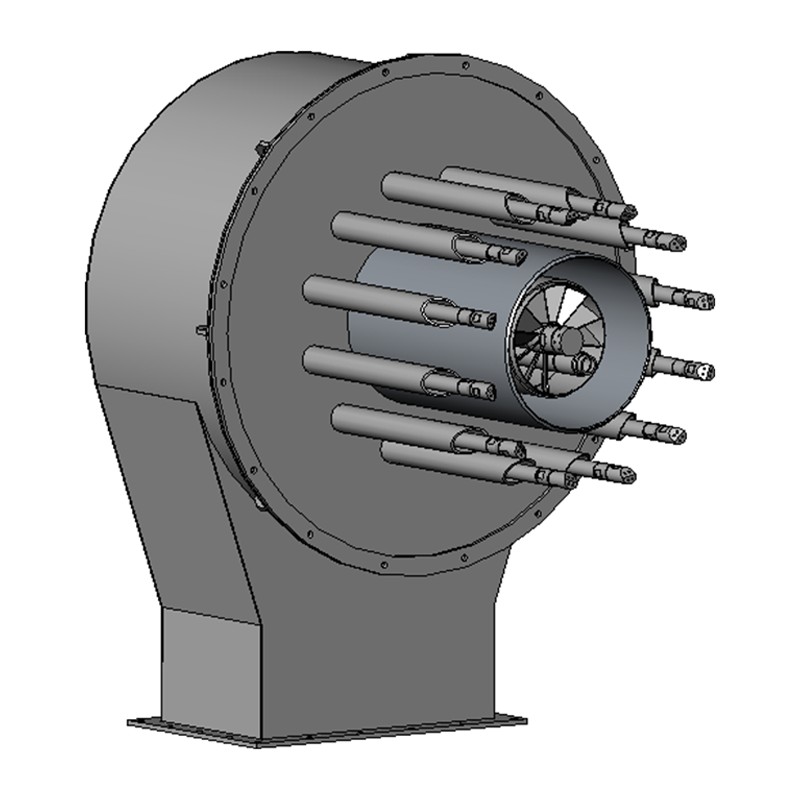
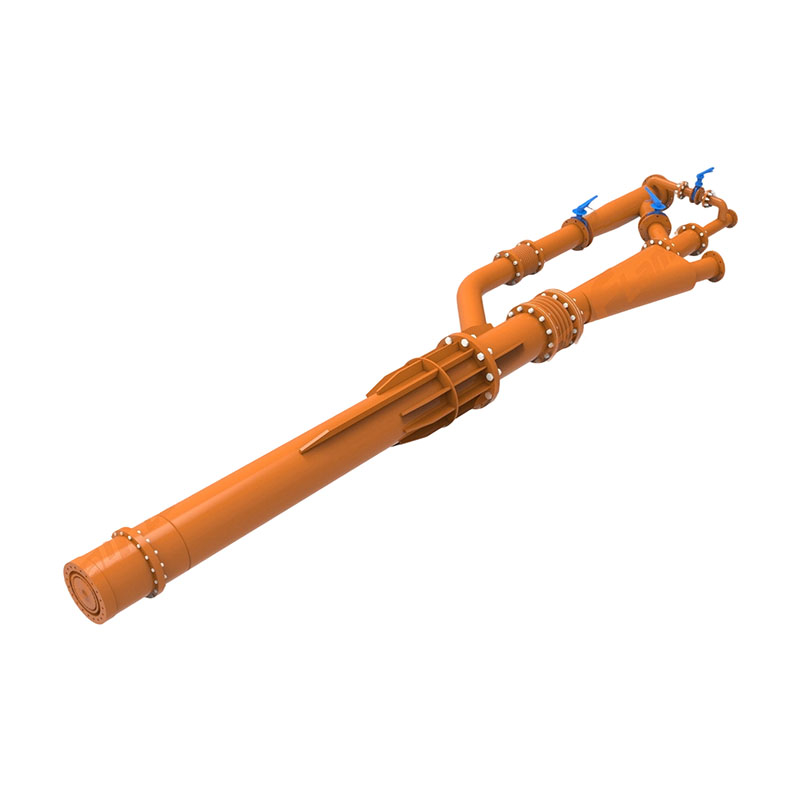
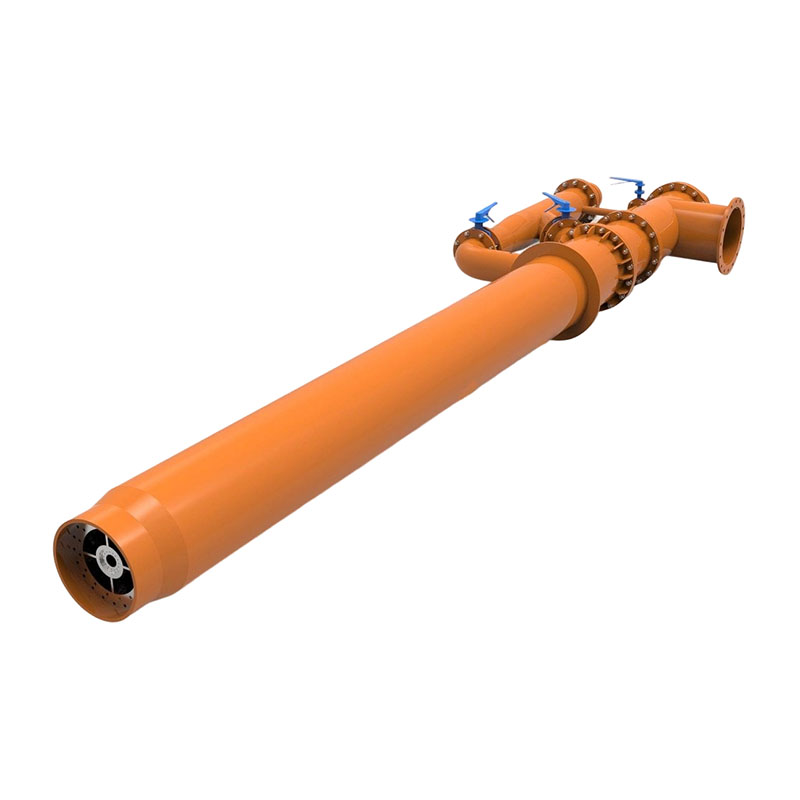
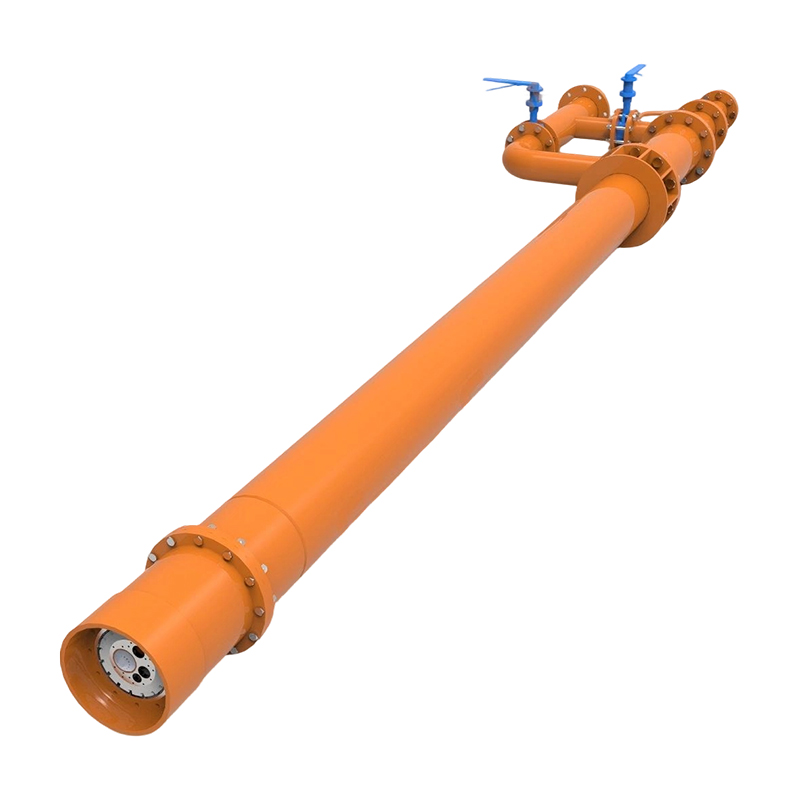
Modern Low-NOx rotary kiln burners use a multi-channel concentric design with typically 3 to 5 separate channels arranged coaxially around a central axis. The number and arrangement of channels varies by supplier and fuel type:
The ratio of swirl air to axial air — expressed through the primary air momentum number (M), defined as the ratio of primary air momentum flux to the secondary air momentum flux — is the principal tuning parameter for flame shape and NOx output. Higher M values produce shorter, bushy, more intense flames (preferred for hard-to-burn clinker); lower M values produce longer, pencil-like flames (preferred for dusty kilns or lime production). Typical primary air quantities in Low-NOx kiln burners are held to 6–12% of total combustion air, compared to 15–25% in older single-channel designs, reducing the amount of high-temperature, oxygen-rich air in the peak flame zone where thermal NOx is generated most rapidly.
In a complete kiln system — particularly modern precalciner kilns which represent the majority of new cement capacity worldwide — NOx reduction is achieved at the system level, not just at the individual burner. The integrated strategy works as follows:
This integrated approach allows modern precalciner cement plants to achieve NOx emission levels of 200–500 mg/Nm³ — well within the EU IED/BREF limit and competitive with more costly SCR systems. A well-commissioned FLSmidth JETFLEX or KHD Pyrojet burner on a 5,000 tpd clinker line, combined with a staged precalciner, has demonstrated sustained NOx levels of 300–350 mg/Nm³ without any SNCR reagent consumption.
| Parameter | Conventional Burner | Low-NOx Kiln Burner |
|---|---|---|
| NOx Emission (cement kiln) | 800–1,500 mg/Nm³ | 200–500 mg/Nm³ |
| Primary Air Volume | 15–25% of total | 6–12% of total |
| Peak Flame Temperature | ~1,900°C | ~1,700–1,800°C |
| Alternative Fuel Capability | Limited (<10% thermal substitution) | Up to 80%+ thermal substitution |
| Specific Heat Consumption | Baseline | Neutral to −3% |
| Refractory Wear Rate | Higher (hotter, shorter flame) | Reduced (longer campaign life) |
| Turndown Ratio | 2:1 typical | 3:1 to 5:1 |
| Simultaneous Multi-Fuel Firing | Not possible | Up to 4 fuels simultaneously |
Selecting the right Low-NOx burner for a rotary kiln is a multi-disciplinary engineering decision that impacts not only environmental compliance but also production capacity, fuel costs, and refractory lifetime. The following criteria should guide the evaluation process:
One of the most commercially important applications of advanced Low-NOx rotary kiln burners is the co-processing of alternative fuels and raw materials (AFR). As landfill disposal costs rise and carbon pricing mechanisms expand globally, cement and lime producers are aggressively increasing their thermal substitution rates (TSR) — the fraction of total heat input derived from alternative fuels.
Leading cement producers in Europe have achieved TSR values of 80–100% at specific plants (e.g., Holcim's plants in Germany and Switzerland), dramatically reducing fossil fuel consumption and CO₂ intensity. The kiln main burner handles the most challenging alternative fuels: coarse RDF (refuse-derived fuel, particle size up to 50 mm), TDF (tire-derived fuel, shredded rubber with steel wire), animal meal, and contaminated biomass. These fuels require a dedicated, large-bore AF channel with:
The NOx implications of high-TSR operation are complex. While biomass and RDF generally contain less fuel-bound nitrogen than petcoke or coal, their lower calorific value and slower burnout rates can alter flame temperature profiles in ways that either increase or decrease thermal NOx depending on kiln configuration. A Low-NOx burner with real-time momentum control is therefore essential for maintaining NOx compliance as fuel mix varies daily or even hourly in high-TSR operations.
A Low-NOx burner is a primary (combustion-side) measure and is most cost-effective as the first line of NOx control. It is frequently combined with secondary (post-combustion) measures when stricter limits or site-specific conditions demand further reductions:
For most cement and lime plants targeting compliance with current EU or US EPA standards, a Low-NOx rotary kiln burner combined with SNCR offers the optimal balance of capital cost, operating complexity, and emission performance, delivering combined NOx levels of 150–250 mg/Nm³ at a total system cost roughly 5–8 times lower than an equivalent SCR installation.
The global Low-NOx burner market for rotary kilns is served by a limited number of highly specialized combustion engineering firms with decades of cement- and lime-specific application knowledge. Key suppliers and their flagship products include:
When evaluating suppliers, buyers should always request detailed reference plant data at comparable kiln sizes, fuel mixes, and clinker output levels, as NOx performance is highly site-specific. A burner achieving 350 mg/Nm³ on a gas-fired kiln may deliver 600 mg/Nm³ on the same kiln running 60% petcoke without system-level combustion adjustments. Third-party emission testing under representative operating conditions — not just supplier-supplied data — should be the standard for due diligence.
The regulatory pressure driving Low-NOx burner adoption continues to intensify globally. The EU's revised BREF for cement, lime, and magnesium oxide (published 2013, under revision for 2024–2025) is expected to tighten BAT-associated emission levels (BAT-AELs) for NOx in cement kilns to 100–450 mg/Nm³ — pushing many existing SNCR-only installations toward SCR retrofits, and making the role of an advanced Low-NOx kiln burner as the foundation layer more critical than ever.
Looking ahead, three emerging trends are reshaping Low-NOx burner technology for rotary kilns:
Low-NOx burners — especially multi-channel rotary kiln burner designs — deliver reliable, cost-effective NOx reduction without significant energy penalties or complex reagent systems. With the ability to cut kiln NOx emissions from over 1,000 mg/Nm³ down to below 400 mg/Nm³ through combustion engineering alone, they remain indispensable in the cement, lime, minerals, and waste co-processing industries. Their compatibility with alternative and waste-derived fuels positions them simultaneously as an emissions control tool and a cost-reduction lever. For plant operators facing tightening regulatory limits, upgrading to a modern Low-NOx rotary kiln burner is consistently the first, most cost-efficient step in a tiered emission control strategy — before investing in SNCR reagent systems or the substantial capital of SCR installations.
A Low-NOx burner typically achieves NOx emissions in the range of 30–150 mg/Nm³ on natural gas in standard industrial applications, using techniques such as air staging, FGR, or fuel staging. An Ultra-Low-NOx (ULN) burner goes further — using lean premix technology and/or deep FGR — to achieve NOx levels below 9 ppm (approximately 17 mg/Nm³). ULN burners are common in California (regulated under SCAQMD Rule 1146) and are typically limited to natural gas or LPG in boilers and process heaters. They are not suitable for rotary kiln applications due to the risk of flashback and the need for very high, stable heat fluxes.
Yes, retrofitting is one of the most common applications. Most multi-channel Low-NOx rotary kiln burners are designed to be compatible with existing kiln hood geometries and burner platform dimensions. A retrofit typically requires replacing the burner body and nozzle assembly, re-routing fuel supply lines for additional fuel channels, upgrading the primary air fan for higher velocity with lower volume, and reconfiguring the combustion control logic in the plant DCS. Retrofit projects on 3,000–5,000 tpd clinker lines typically cost €0.5–1.5M and achieve payback within 2–4 years through fuel cost reduction and avoided compliance penalties.
When properly designed and commissioned, a Low-NOx rotary kiln burner should have a neutral to slightly positive effect on clinker quality and kiln output. Lower primary air volumes increase the available secondary air temperature at the kiln hood (by approximately 20–50°C), which improves heat recovery from the clinker cooler and reduces specific heat consumption. However, if the burner is not correctly tuned — particularly if flame shape is too long or insufficiently intense — free lime content may increase, indicating incomplete sintering. Commissioning and ongoing operational support from the burner supplier is essential during the first 3–6 months after a retrofit or new installation.
Modern Low-NOx rotary kiln burners are designed for multi-fuel flexibility. They can simultaneously fire pulverized coal (particle size <100 µm, moisture <1%), petroleum coke (petcoke), natural gas, LPG, heavy fuel oil (HFO), and a range of alternative fuels including tire-derived fuel (TDF), refuse-derived fuel (RDF, particle size up to 30–50 mm depending on channel design), animal meal, dried sewage sludge, and biomass pellets. The ability to handle multiple fuels simultaneously without process disruption is a key competitive differentiator among premium suppliers. Plants achieving TSR above 60% typically require a dedicated AF channel with a minimum 25–30 mm inner diameter and hardened nozzle tip construction.
Performance monitoring typically includes: a Continuous Emission Monitoring System (CEMS) installed at the kiln stack measuring NOx, SO₂, CO, O₂, and total dust in real time; in-kiln flame cameras providing visual and infrared flame shape monitoring; primary air flow, pressure, and temperature transmitters on each burner channel; fuel mass flow meters (Coriolis-type for coal and AF); and clinker quality analyzers (free lime, Blaine fineness). Advanced installations also deploy acoustic pyrometers for kiln shell temperature mapping and optical gas analyzers in the kiln inlet chamber for CO/O₂ balance monitoring — providing early warning of combustion anomalies before they impact NOx levels or product quality.
The main structural body (lance tube, air ducts, outer casing) of a Low-NOx rotary kiln burner typically has a service life of 15–25 years with proper maintenance. Wear components — including nozzle tips, swirl vanes, and coal/AF transport pipes — require replacement every 12–36 months depending on fuel abrasiveness and operating hours. Suppliers generally maintain spare parts programs for a minimum of 15 years after manufacture. The economics strongly favor extending burner body life through periodic nozzle replacement rather than full burner replacement, as nozzle tip assemblies typically cost 5–15% of the full burner system price.
For kilns operating primarily on coal or petcoke with limited alternative fuel co-processing, a Low-NOx burner alone typically achieves 400–600 mg/Nm³ — compliant with the current EU IED limit of 500 mg/Nm³ but potentially above the tighter BAT-AEL range expected in the revised cement BREF (likely 100–450 mg/Nm³). In such cases, SNCR addition is the most common next step. For gas-fired kilns or kilns with high biomass TSR, burner-only NOx levels of 250–400 mg/Nm³ are achievable, satisfying current limits. Plants facing post-2025 stringency — particularly in Germany, Netherlands, and Austria — are increasingly combining Low-NOx burners + SNCR + staged precalciner to remain compliant without SCR capital investment.


 OEM/ODM High-Performance Combustion & Thermal Equipment Manufacturers
 English
 русский
 Français
 Español
 عربى
عربى