Content
If you have ever asked, how does a gas furnace work? you are not alone. It is one of the most common questions for homeowners, facility engineers, and industrial plant managers who rely on gas-fired heat. As a combustion equipment manufacturer, we at Jiangsu Jufeng Thermal Technology Co., Ltd. (GENERALFLAME) design gas burners and industrial combustion systems every day. The principles behind those large systems are the same principles that keep residential and commercial gas furnaces running safely and efficiently.
In this guide, we explain the complete gas furnace process, from the thermostat call to heat delivery, and highlight what combustion professionals look for in a well-designed system.
A gas furnace is a heating appliance that burns natural gas or propane to generate heat. In its most common forced-air form, it draws cool air from a building, passes that air over a hot heat exchanger, and sends the warm air through ductwork back into the occupied space.
Modern gas furnaces can be single-stage, two-stage, or modulating. Single-stage units operate at full fire whenever the thermostat calls for heat. Two-stage units offer a low-fire mode for moderate days. Modulating units continuously adjust the firing rate to match the load, which improves comfort and saves fuel.
It helps to think of a gas furnace as a controlled combustion system rather than a simple heater. The process follows the same basic sequence every time a space requires heat.
This sequence is exactly what happens in a large industrial gas-fired furnace, except the burner is bigger, the combustion air system is more sophisticated, and the control logic usually includes more safety interlocks.
Every gas furnace relies on a matched set of components to deliver heat safely. Understanding these parts makes it easier to spot efficiency gaps, diagnose failures, and compare equipment.
| Component | Function |
|---|---|
| Burner | Mixes fuel and air and supports stable combustion |
| Gas valve | Opens and closes fuel flow in response to controller signals |
| Igniter | Starts the gas-air mixture burning |
| Flame sensor | Detects flame and shuts off gas if ignition fails |
| Heat exchanger | Transfers heat from combustion gas to the air stream |
| Blower | Moves cold air across the heat exchanger and pushes warm air into ducts |
| Vent or flue | Carries combustion byproducts safely outdoors |
In a standard furnace, the burner receives a carefully metered amount of gas and combustion air. The gas valve controls flow, while the blower supplies air through the burner opening. In high-efficiency condensing furnaces, the heat exchanger is built to remove extra heat from the flue gas, which is why the exhaust can be vented through plastic piping.
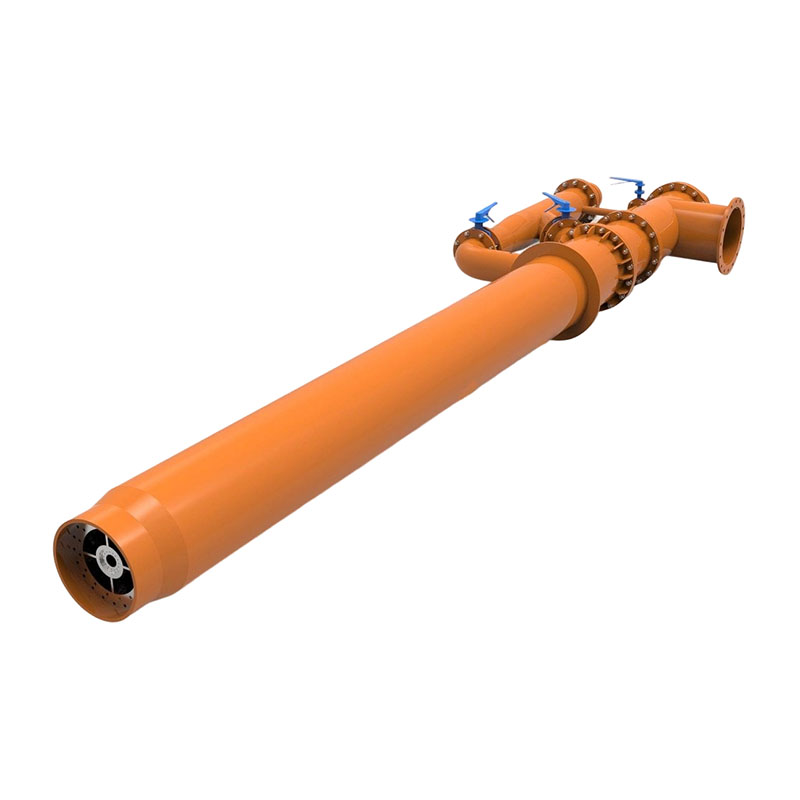
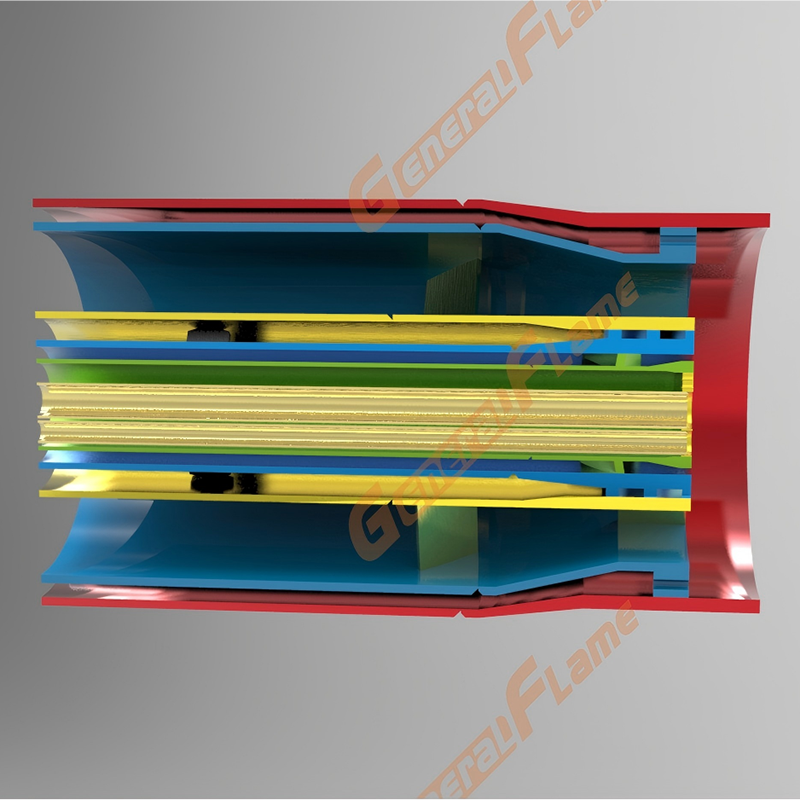 GeneralFlame Long-Flame Gas Fuel Burner with Laval NozzleThis burner uses a patented Laval nozzle and adjustable swirlers for precise flame control, suited for rotary kilns requiring long flames, such as in nickel-iron and lithium battery production.View Product →
For users who need a clean-burning, reliable gas fuel burner, the design should be evaluated against the furnace chamber, air supply method, and emission requirements. A burner that works well on paper may perform poorly if the gas-air mixing is not matched to the actual furnace geometry.
Efficiency in a gas furnace is usually measured by AFUE, or Annual Fuel Utilization Efficiency. A non-condensing furnace may be rated around 80 percent, while a condensing furnace can reach 95 percent or higher because it captures latent heat from water vapor in the flue gas.
Combustion quality matters in every gas-fired system. In our kiln combustion management system projects, we use the same flame-management logic to control fuel and air ratios, monitor safety interlocks, and stabilize furnace conditions.
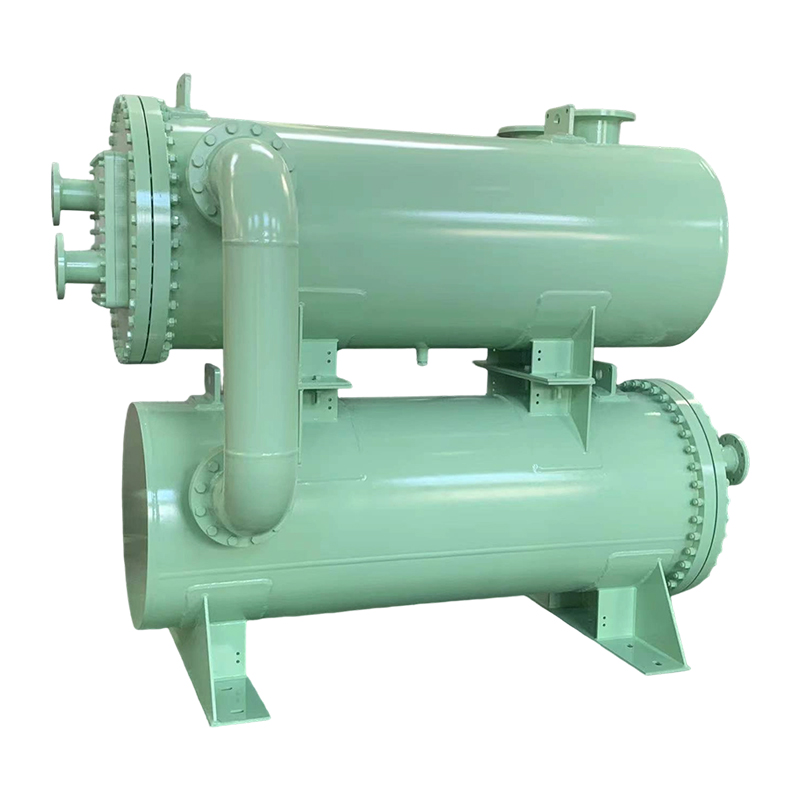
 GeneralFlame Low-NOx Burner with FGR and PLC ControlDesigned for strict emission limits, this burner keeps NOx under 30 mg/m³ via staged combustion and flue gas recirculation, while offering smart monitoring and modular installation for various kilns.View Product →
For applications with strict emission requirements, a low NOx gas burner helps maintain stable combustion while reducing pollutants. This is common in industrial kilns, heating furnaces, and boilers where local environmental regulations demand cleaner operation.
Residential gas furnaces are compact, factory-assembled appliances. Industrial gas furnaces are much larger, with heat duties ranging from small process heaters to huge rotary kilns. At GENERALFLAME, we engineer industrial furnace and combustion technology for rotary kilns, smelting furnaces, hot blast stoves, and heat treatment lines.
The fundamental chemistry is the same. Natural gas and propane burn the same way in a small furnace or a large rotary kiln. The real difference is in burner sizing, flame shape, refractory lining, combustion air preheating, and automation.
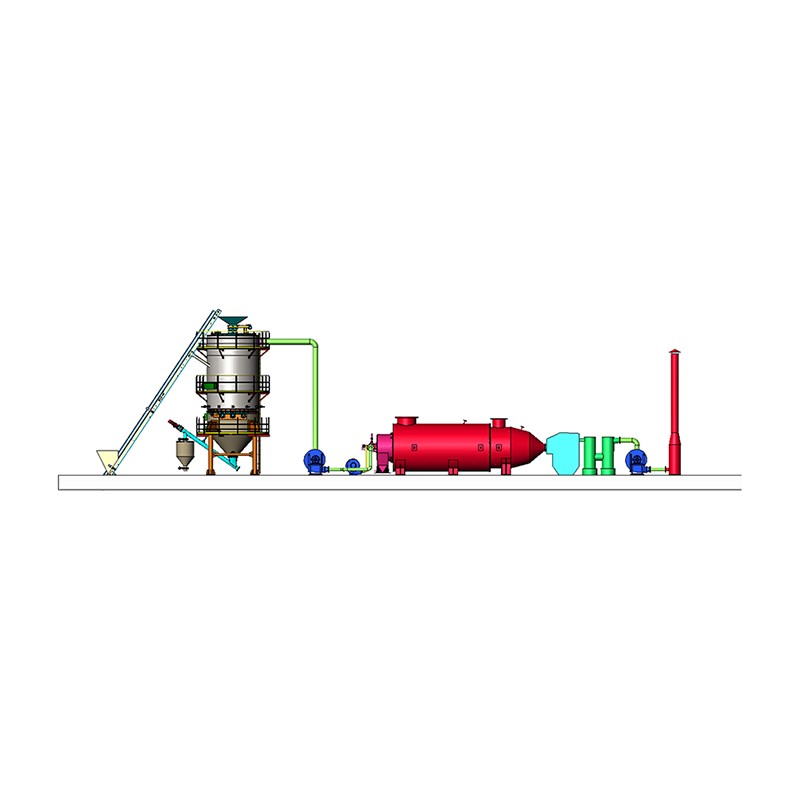
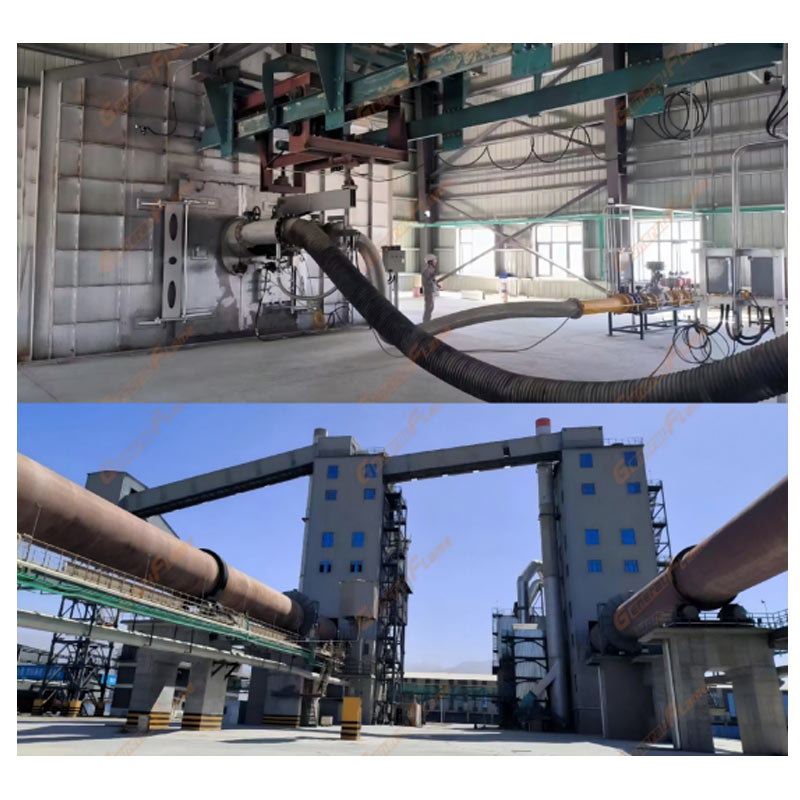 GeneralFlame Adjustable Rotary Kiln Burner for Multiple FuelsSupporting heavy oil, gas, coal, and biomass, this burner features a variable-pitch swirl generator and Laval nozzle for wide flame adjustability, reducing fuel costs and improving throughput in large kilns.View Product →
If your facility operates a gas-fired rotary kiln, selecting a burner with the right turndown range and flame geometry can lower fuel costs and improve throughput. The same is true for other large gas-fired equipment.
Both residential and industrial gas furnaces perform best when combustion, airflow, and venting are verified regularly.
A well-maintained gas furnace can operate safely for decades. In industrial settings, scheduled combustion system audits are essential because unplanned downtime is expensive.
A home furnace is the main heating appliance for a forced-air system. It burns fuel or uses electricity to heat air, then pushes that air through ductwork into living spaces.
The thermostat sends an electrical signal to the control board when the room temperature drops below the setpoint. The control board then opens the gas valve, starts ignition, and brings on the blower after the heat exchanger is warm.
Yes. Gas may provide heat, but the blower, ignition system, control board, and safety valves all require electricity. During a power outage, the furnace will not heat unless it has a backup power source.
A gas furnace heats air and distributes it through ducts. A gas-fired boiler heats water or steam and distributes it through pipes and radiators. Both burn gas, but the heat transfer medium is different.
Gas combustion requires oxygen. In a sealed combustion furnace, air is drawn in from outdoors. In a conventional furnace, indoor air is used. Always ensure adequate combustion air to avoid backdrafting and incomplete combustion.


 OEM/ODM High-Performance Combustion & Thermal Equipment Manufacturers
 English
 русский
 Français
 Español
 عربى
عربى