Content
Most plant engineers can point to an industrial furnace and explain what it does: it gets hot and processes material. But when someone asks how does an industrial furnace work in detail, the answer involves combustion chemistry, heat transfer physics, refractory materials, airflow, and a control system that keeps everything in balance. These details decide whether a furnace runs efficiently for decades or becomes a constant source of fuel waste and maintenance problems.
At its core, an industrial furnace is a controlled heat-containment system with three jobs: generate heat, keep it inside an insulated chamber, and deliver it to the material being processed.
Most combustion-based furnaces generate heat by burning fuel — natural gas, fuel oil, pulverized coal, biomass gas, or a combination — with combustion air inside the chamber. Electric heating is a clean alternative for some applications, but fuel-fired furnaces remain the workhorses of high-throughput industries because they release large amounts of energy at a competitive operating cost.
Once released, heat reaches the material through three transfer mechanisms. Radiation dominates at high temperature: the flame, the hot gas, and the refractory walls radiate energy directly onto the material surface. Convection becomes significant where gas velocity is high and temperature is lower, such as in preheating sections. Conduction carries heat through the material itself and through the surfaces it touches.
A well-designed furnace balances these mechanisms. In a rotary kiln, the flame shape and the momentum of the combustion jet determine how far radiation travels down the kiln, while the rotating shell mixes the charge so heat penetrates evenly. That is why burner selection can be the difference between a smooth-running kiln and one plagued by hot spots, ring formation, or high fuel consumption.
Every industrial furnace — batch or continuous, direct-fired or radiant-tube — shares the same family of components. Understanding each part's role is the first step toward better operation and better purchasing decisions.
| Component | Function |
|---|---|
| Burner | Mixes fuel with combustion air, ignites the mixture, and shapes the flame |
| Combustion chamber | Contains the flame and provides space for heat release |
| Refractory lining | Protects the outer shell and minimizes heat loss |
| Feed and discharge system | Moves material into and out of the heated zone |
| Exhaust system and stack | Removes flue gas and maintains furnace pressure |
| Control and instrumentation | Monitors temperature, pressure, and flame; adjusts fuel and air |
| Heat recovery equipment | Captures waste heat from flue gas to preheat combustion air |
The burner is the heart of the system. It must deliver the correct flame length, width, temperature profile, and turbulence for the process. A short-flame burner in a long rotary kiln overheats the inlet end and leaves the discharge end underheated. A burner with too little momentum produces a lazy flame that radiates wastefully into the refractories instead of into the material.
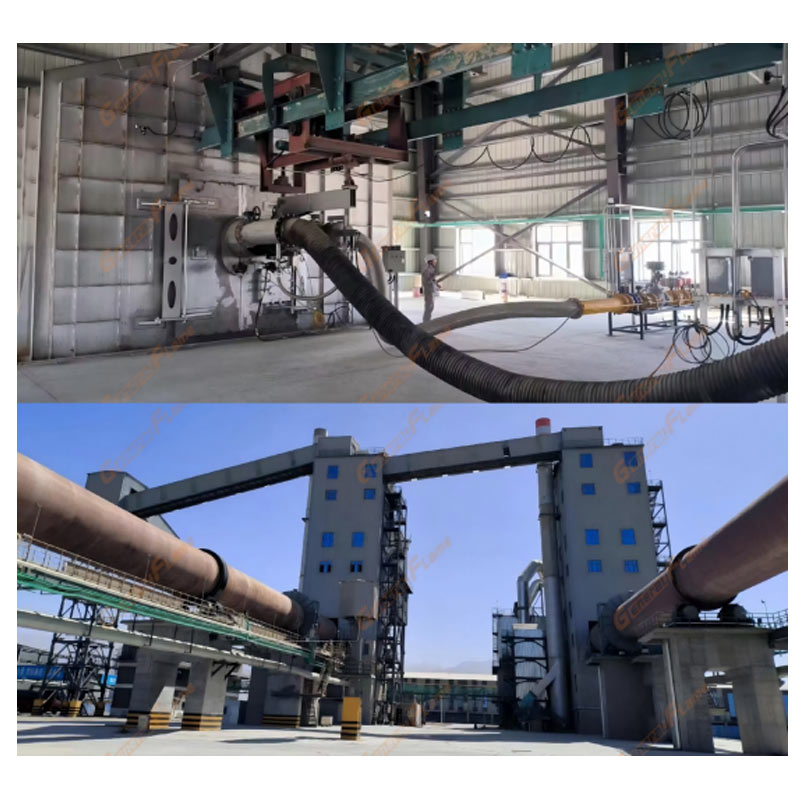 Rotary Kiln Burner for Multi-Fuel Industrial ProcessesThis burner suits diverse fuels and features an adjustable ALVS design for precise flame control. An excellent match for the burner requirements discussed earlier.View Product →
The refractory lining is the second most important component. It keeps heat inside the chamber and protects the steel shell from temperatures that would soften and distort it. Refractory selection depends on process temperature, the chemical atmosphere inside the furnace, and the abrasiveness of the material being processed.
The control system has grown more sophisticated in recent years. Thermocouples, pressure transmitters, and flame detectors feed data into a programmable controller that adjusts fuel valves and dampers to hold the setpoint. Many operators now rely on a combustion management system to coordinate startup, monitoring, safety interlocks, and air-fuel ratio trimming. We have seen such systems reduce fuel consumption and operator workload on rotary kiln lines.
Combustion is a rapid chemical reaction between fuel and oxygen that releases heat. For a burner to sustain it, three elements must be present: fuel, an oxidizer, and enough heat to ignite the mixture and keep the reaction going.
The theoretical amount of air needed to burn all the fuel is called the stoichiometric ratio. Real burners run with a margin of excess air because fuel and air can never mix perfectly inside the chamber. Too little excess air leaves fuel unburned, producing carbon monoxide and soot. Too much excess air absorbs heat and carries it up the stack, lowering efficiency. Modern burners control this balance continuously, holding excess air at the minimum level that still yields complete combustion.
Fuel type changes the entire combustion picture. Natural gas burns quickly with a clean, compact flame. Liquid fuels such as heavy oil must be atomized into fine droplets before they burn evenly, a task that becomes harder with viscous residues. Solid fuels like pulverized coal produce long, luminous flames with intense radiation and significant ash handling. Alternative fuels derived from biomass add variability in heating value and demand responsive burner control. For many plants, a multi-fuel burner is the most economical answer because it allows switching between fuels based on price and availability.
Industrial furnaces come in many shapes because processes demand different temperature profiles, retention times, and handling methods. The broadest dividing line is between batch furnaces, which process discrete loads, and continuous furnaces, which process a steady stream of material.
Batch furnaces include car-bottom furnaces for large forgings and chamber furnaces for tool steel heat treatment. Continuous furnaces — pusher furnaces, walking-beam furnaces, rotary hearth furnaces, and rotary kilns — dominate high-volume operations because they hold steady thermal conditions and use fuel more efficiently.
The rotary kiln deserves special attention. It is a long, slightly inclined rotating cylinder that transports material from the feed end to the discharge end while hot gas moves in the opposite direction. This countercurrent arrangement lets the flue gas preheat the incoming material, making the rotary kiln remarkably efficient for processes such as cement clinker production, lithium salt conversion, nickel ore calcination, and zinc oxide roasting. The burner at the discharge end must produce a flame long enough to distribute heat across the entire reaction zone, which is why rotary kiln burners are matched to the specific material, capacity, and temperature of each kiln.
Steel heating furnaces, used in rolling and forging lines, require precise temperature uniformity across the slab or billet. Multiple burners are arranged along the furnace length to create a controlled thermal profile that minimizes scale formation while maintaining throughput.
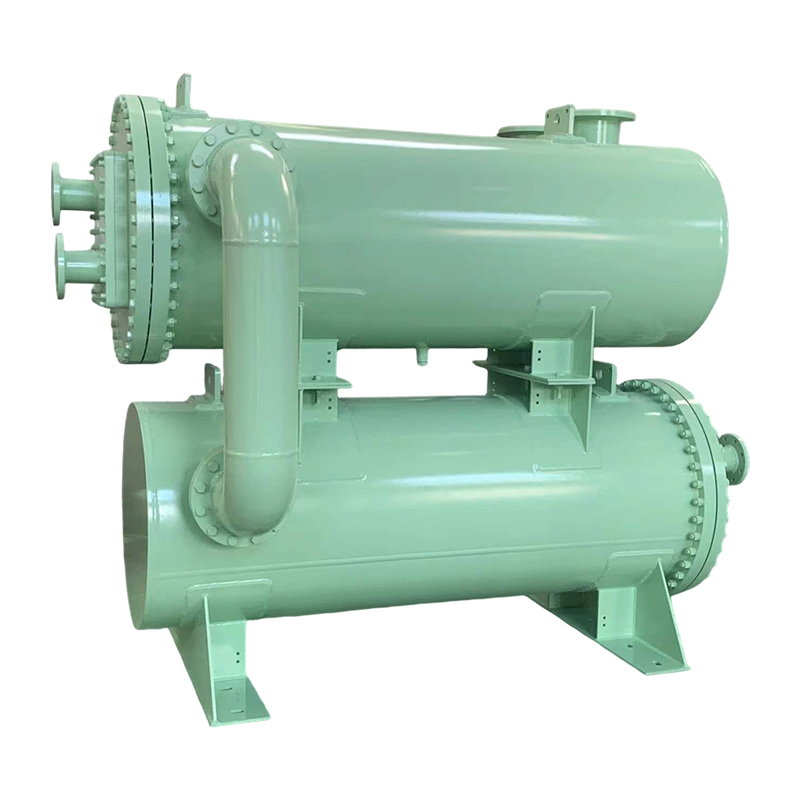 Heating Furnace Burner for Efficient and Uniform Steel HeatingDesigned for steel furnaces with low-NOx and waste-heat recovery, offering precise temperature control. Directly addresses the need for efficient combustion discussed.View Product →
Fuel cost is the largest operating expense for most furnace plants, and flue gas is the largest energy loss. That makes the combustion system the natural starting point for efficiency improvement. A well-tuned low-NOx burner reduces both fuel consumption and nitrogen oxide formation at the same time. Staged combustion, flue-gas recirculation, and optimized flame profiles keep flame temperature peaks moderate and NOx formation low.
 Low-NOx Burner with High Efficiency and Flue Gas RecirculationAchieves low NOx emissions and high combustion efficiency, ideal for recovering waste heat as described. Complements the preceding efficiency-focused discussion.View Product →
Beyond the burner, operators recover waste heat from the flue gas with recuperators or regenerators that preheat combustion air. Preheated air can cut fuel input by 5 to 15 percent, depending on the temperature recovered. Better refractory insulation and careful maintenance of furnace seals reduce standing losses as well.
For plants that must meet strict emission limits, an SNCR system can be added to inject a reducing reagent into the hot gas, converting nitrogen oxides into nitrogen and water. Combined with a combustion management system, these measures create a furnace that is both cleaner and cheaper to run.
Understanding how an industrial furnace works is not just theoretical knowledge. It is the foundation for troubleshooting uneven temperatures, reducing fuel consumption, extending refractory life, and selecting equipment that will run dependably for decades. No two furnaces are exactly alike: the correct burner, refractory, and controls all depend on the material, the fuel, and the production target.
At Jiangsu Jufeng Thermal Technology (GENERALFLAME), we have focused our engineering work on industrial combustion equipment and furnace systems for lithium processing, ferronickel smelting, cement, steel, and waste treatment. From rotary kiln burners to low-NOx burners and complete furnace systems, we help customers match equipment to their process. Our broader work in industrial furnace and combustion technology is a useful starting point for planning a new line or modernizing an existing one.


 OEM/ODM High-Performance Combustion & Thermal Equipment Manufacturers
 English
 русский
 Français
 Español
 عربى