Content
Ask three people on a plant floor how a BTU is measured and you will often get three different answers, all of them partly right. A lab technician will talk about a bomb calorimeter. A combustion engineer will pull out a flow meter and a pair of thermocouples. A finance manager will simply point at the gas bill. The truth is that the British thermal unit is not measured one way, it is measured at several different points in the chain from fuel to finished product, and each point answers a slightly different question.
This guide walks through what a BTU actually represents, the practical methods used to measure it, and why the numbers from a laboratory certificate rarely match the numbers on a kiln's heat balance sheet.
At its core, one BTU is the amount of heat required to raise the temperature of one pound of water by one degree Fahrenheit. That definition dates back to the era of steam engine development, when engineers needed a common yardstick to compare coal from different mines. It is a definition rooted in water, which is why it feels slightly old-fashioned next to the joule, but it remains the working language of boilers, furnaces, and rotary kilns across North America and much of the international fuel trade.
Because water's heat capacity shifts slightly with temperature, historical definitions used different starting points, and small discrepancies crept in. Modern practice settles on standardised values. The International Table BTU equals roughly 1,055.06 joules, while the thermochemical BTU is about 1,054.35 joules. The difference is under a tenth of a percent, which sounds trivial until you multiply it by a few million BTUs per hour over a year of operation.
It also helps to separate energy from power. A BTU is a quantity of energy, like a litre of fuel in a tank. BTU per hour is a rate, like the flow through a pipe. Burner capacity, kiln heat demand, and heat loss are all rates, so the number you see on a nameplate is almost always BTU/hr rather than BTU.
This is the laboratory route. A precisely weighed sample, usually about a gram, is sealed inside a stainless steel vessel with oxygen at roughly 30 atmospheres. The vessel sits in a known mass of water inside an insulated jacket, the sample is ignited, and the temperature rise of the water is recorded. Because the heat capacity of the whole system is calibrated beforehand using a reference material such as benzoic acid, the temperature rise converts directly into energy released per unit mass of fuel.
The result is the higher heating value, or gross calorific value, because the water produced during combustion is condensed and its latent heat is recovered in the measurement. Subtract that latent heat and you arrive at the lower heating value, which is what most furnace calculations actually use, since water leaves a kiln as vapour rather than liquid.
Instead of measuring the fuel, you can measure the effect. For a water circuit this is straightforward: flow rate multiplied by specific heat capacity multiplied by the temperature difference between inlet and outlet. A circuit moving 600 kg of water per hour with a 10 °C rise absorbs about 25,000 kJ per hour, which is a little under 24,000 BTU/hr. The instruments involved are a flow meter, two temperature sensors, and something to log them.
The same principle applies to a kiln shell, a dryer, or a heat exchanger, though the calculation becomes messier because solids do not mix as uniformly as water and their specific heat changes with temperature and moisture content.
The third route is the one most plants rely on day to day. Measure the volumetric or mass flow of fuel, look up or test its heating value, and multiply. One hundred normal cubic metres per hour of natural gas at roughly 36,000 BTU per cubic metre gives about 3.6 million BTU/hr of input. For liquid fuels a mass flow meter is preferred, since density and temperature corrections introduce error into volumetric readings.
This method measures input, not useful output. Everything that leaves through the stack, the shell, or the cooling water is still counted as if it had done work, which is exactly why two departments can argue about the same kiln without either of them being wrong.
Most of the confusion in industrial heat accounting comes from mixing bases. A supplier quotes higher heating value, a burner is sized on lower heating value, and a spreadsheet quietly treats them as interchangeable. Solid and liquid fuels also vary batch to batch, and alternative fuels such as biomass, waste-derived fuel, or solvent residues can swing widely in moisture and ash content. Sampling method matters as much as the calorimeter itself.
 Multiple Fuel Co-combustion Industrial BurnerFor multi-fuel kiln operations, this industrial burner supports simultaneous or sequential fuels with adjustable axial and swirl airflows and PLC control.View Product →
When a kiln runs on more than one fuel, each stream needs its own flow measurement and its own heating value, and the totals should be reconciled against the heat actually absorbed by the process. If they diverge by more than a few percent, the problem is usually instrumentation rather than chemistry.
| Unit | Approximate BTU equivalent | Where you meet it |
|---|---|---|
| 1 kilowatt-hour | 3,412 BTU | Electric heaters and preheaters |
| 1 joule | 0.0009478 BTU | Scientific data and SI-based reports |
| 1 therm | 100,000 BTU | Natural gas billing |
| 1 normal cubic metre of natural gas | roughly 35,000-40,000 BTU | Burner sizing and flow totalisers |
| 1 kilogram of diesel | roughly 40,000 BTU | Liquid fuel firing and tanker deliveries |
The natural gas figure varies with composition and with whether the basis is gross or net, so always confirm which convention the certificate uses before you put the number into a heat balance.
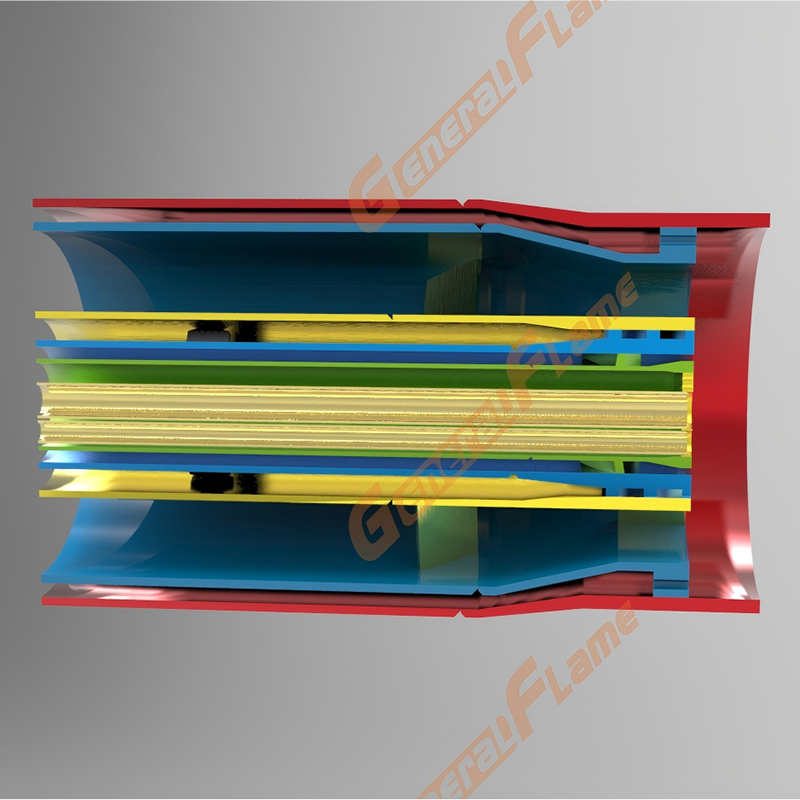 GeneralFlame Gas Fuel Burner for Long-Flame KilnsGas-fired burner with Laval nozzle and adjustable axial, swirl, and center air for long-flame rotary kiln applications such as nickel-iron and lithium materials.View Product →
Calibration discipline is what separates a useful measurement from a decorative one. A temperature sensor that drifts by two degrees will quietly distort every BTU calculation downstream of it, and nobody notices until the fuel bill changes for no apparent reason.
On a rotary kiln, the BTU is the working currency of the whole operation. Specific fuel consumption is quoted in BTU or gigajoules per tonne of product, whether that product is clinker, lime, spodumene, nickel laterite, zinc oxide, or pellets. A typical cement kiln sits somewhere around 3 gigajoules per tonne of clinker, roughly 2.8 million BTU, and every increment above that benchmark represents money leaving through the stack.
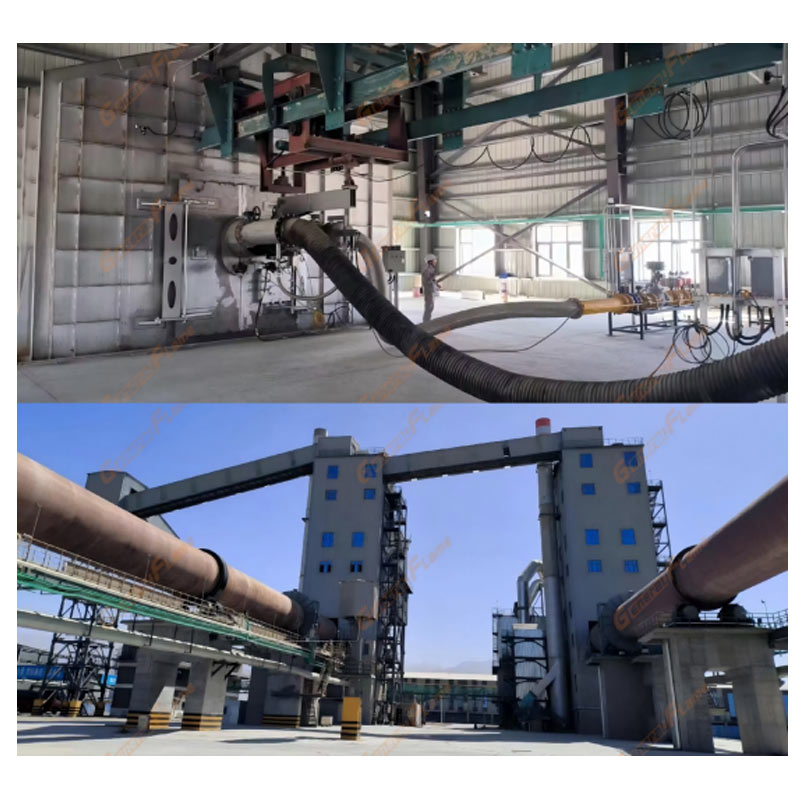 GeneralFlame Rotary Kiln Burner for Multiple FuelsMulti-fuel rotary kiln burner with adjustable Laval nozzle and swirl generator for precise flame control in cement, building materials, and metal smelting.View Product →
Measuring accurately lets you separate the losses you can influence from the ones you cannot. Excess air is a good example: too little and you leave unburned fuel in the gas stream, too much and you heat nitrogen for nothing. Both show up clearly in a heat balance built on measured BTUs, and both are corrected at the burner rather than in the spreadsheet. Our team has spent years building combustion systems for exactly these processes, and the industrial furnace and combustion technology overview explains how the measurement work feeds into equipment selection.
How BTU is measured depends entirely on the question you are asking. If you want to know what a fuel is worth, a calorimeter gives you the answer. If you want to know what your kiln is doing with that fuel, you need flow and temperature data reconciled into a heat balance. The two numbers should agree within a reasonable band, and when they do not, the gap is usually the most valuable piece of information in the plant.
If you are working through a heat balance on a rotary kiln, a smelting furnace, or an incineration line and want a second opinion on the burner side of the equation, our engineers are always happy to talk it through. You can reach them through the contact page.


 OEM/ODM High-Performance Combustion & Thermal Equipment Manufacturers
 English
 русский
 Français
 Español
 عربى