Content
If your furnace has started making a noise you do not like and the technician has begun using phrases like "getting on a bit," the real question underneath is simple: how long should a furnace last before it stops being worth the money? For most homes, the honest answer lands between 15 and 20 years for a gas furnace, and a little longer for electric models. In a plant, the numbers stretch out considerably — but the logic behind them is almost identical.
We build burners and combustion systems for rotary kilns, heating furnaces, and incinerators, so we spend a lot of time looking at equipment that has been running for a decade or three. What follows is what that experience has taught us about lifespan, the things that quietly shorten it, and the signals that tell you replacement is the cheaper conversation.
A well-maintained residential furnace typically reaches 15 to 20 years, and a genuinely high-quality unit in a mild climate with good service history can push toward 30. That upper figure is the exception, not the rule. Efficiency and reliability usually start to slip well before the shell or the heat exchanger actually fails, which is why so many people replace a furnace that is still technically "working."
Industrial equipment follows a different curve because it is designed to be rebuilt rather than thrown away. A kiln shell may serve for decades while its refractory lining is replaced every few years, and the burner at the front end has its own, shorter clock. Here is a rough comparison to give you a sense of scale.
| Furnace type | Typical lifespan | What limits it |
|---|---|---|
| Residential gas furnace | 15–20 years | Heat exchanger and blower wear |
| Residential electric furnace | 20–30 years | Elements, contactors, and controls |
| High-efficiency condensing furnace | 15–20 years | Condensate handling and secondary exchanger care |
| Industrial kiln or process furnace shell | 20–40+ years | Refractory relining cycles, thermal cycling |
| Kiln or furnace burner | 10–20 years | Nozzle wear, quarl condition, fuel quality |
| Waste incinerator | 15–25 years | Aggressive flue gas, cooling and lining upkeep |
Two furnaces from the same production line, installed a mile apart, can have wildly different lives. The difference is almost never luck.
An oversized furnace heats the space quickly and then shuts down, over and over. That short cycling is hard on heat exchangers, igniters, and controls, and it wastes fuel. Undersized equipment runs flat out for its whole life instead. Neither mistake is fatal on day one, but both shave years off the back end.
Ductwork, gas pressure, airflow, flue slope, and clearances all matter more than most people expect. A rushed installation that leaves static pressure too high or combustion settings untuned will shorten the furnace's life no matter how good the equipment is.
Clean, consistent fuel means clean, consistent combustion. Dirty fuel gas, water in the oil line, or poorly prepared solid fuel produces deposits on nozzles and refractories, hot spots, and unstable flames. In our experience, fuel handling upstream of the burner decides a surprising share of downstream maintenance costs.
An annual service where someone changes the filter and writes an invoice is not the same as combustion analysis, flame pattern checks, and a look at the refractory. The second version is what actually extends life.
Long, cold winters, corrosive atmospheres, dusty air, and coastal humidity all take their toll. Equipment that runs continuously at high load ages differently from equipment that idles most of the week — sometimes better, sometimes worse, depending on how well the low-fire regime is set up.
In process plants, "how long does the furnace last" is really three separate questions: how long the shell lasts, how long the refractory lasts, and how long the burner lasts. Treating them as one number is where maintenance budgets go wrong.
A rotary kiln burner usually gives 10 to 20 years of service, but that range collapses quickly if the nozzle is eroded, the flame is misaligned against the refractory, or the fuel is inconsistent. Burners that are tuned after every fuel change, and checked for flame shape rather than just "is it lit," tend to reach the upper end. Replacing a tired burner is also often the cheapest way to recover efficiency and cut emissions on an otherwise healthy kiln — which is why we keep the conversation focused on the whole combustion system rather than the burner alone.
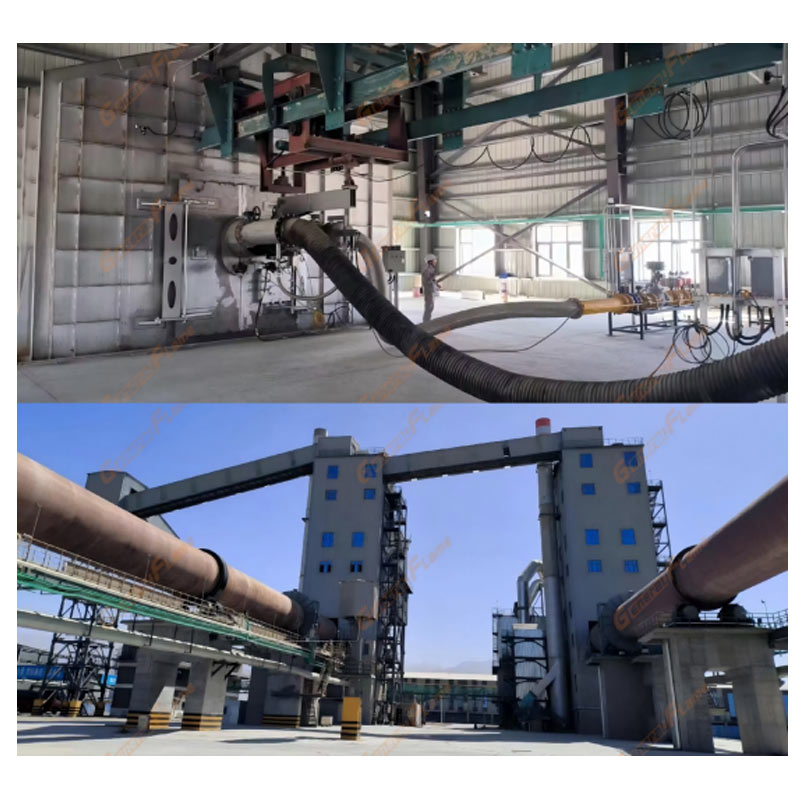 GeneralFlame Adjustable Rotary Kiln BurnerDesigned for rotary kilns and multiple fuels, with adjustable Laval nozzle and swirl generator to control flame length and width.View Product →
Most industrial furnace "failures" are lining failures. Thermal cycling, slag attack, and flame impingement determine relining intervals far more than shell thickness does. If your team is relining more often than the original design intended, the combustion side of the story is worth reviewing — see our notes on industrial furnace and combustion technology for how flame geometry and excess air influence lining life.
Whether it is in a basement or a burner platform, the warnings look familiar:
The rule of thumb many contractors use is straightforward: if a single repair costs more than half of what a new unit would cost, and the furnace is already past two-thirds of its expected life, replacement usually wins. Add in a second repair in the same season and the maths becomes difficult to argue with.
There is also a compliance angle. If tighter NOx or particulate limits are coming for your area, spending heavily on an old burner can be money spent twice. A modern low-NOx design may pay for part of itself through reduced fuel use and avoided retrofit pressure later.
 GeneralFlame Low-NOx Kiln and Furnace BurnerUses staged combustion and flue gas recirculation to control NOx within 30 mg/m³, with modular design for 1.5–6 m kilns.View Product →
Most of the practical advice here costs very little:
On the process side, keeping the burner matched to the duty it actually sees is the single biggest lever. A furnace burner that is correctly sized, correctly aimed, and checked regularly will comfortably outlast one that is simply "still running."
 Heating Furnace Burner for Metal Hot WorkingCombines low-NOx burners with flue gas waste heat recovery and automatic temperature control for heating, forging, and heat treatment furnaces.View Product →
If it is still efficient, quiet, and repair-free, it can keep going. If repairs are stacking up or efficiency has clearly dropped, replacement is usually the better investment — and you will feel the difference in fuel bills before you feel it in comfort.
Generally no. Electric furnaces have fewer combustion-related parts to degrade, so 20 to 30 years is common, while gas units typically land at 15 to 20.
Every 10 to 20 years is a fair planning range, but condition-based decisions beat calendar ones. If you are seeing eroded nozzles, unstable flames, or repeated tuning to hold emissions, it is time for a proper assessment — our article on why heating furnace burners fail walks through the common causes.
Yes, repeatedly. Shell life of several decades is realistic when linings are maintained and the flame is not impinging where it should not be. The lining is a wear part, not a permanent fixture — budget for it as such.


 OEM/ODM High-Performance Combustion & Thermal Equipment Manufacturers
 English
 русский
 Français
 Español
 عربى