Content
A rotary kiln rarely fails without warning. The shell usually tells you something is changing long before a crack appears: a slightly tighter oval as each cross-section rolls over a tire, a small hump in the axis, a hot spot that returns to the same place after every brick job. Kiln shell laser diagnostics exist to catch those signals early and turn them into numbers you can act on during a planned stop rather than a forced one.
Below, we walk through what a laser survey actually measures, how the measurement is carried out on a live kiln, and how to read the results alongside what is happening on the combustion side of the process.
A kiln shell laser system is a contact-free measurement tool. Instead of clamping dial gauges to the shell or stretching wires between the piers, a laser tracker or laser scanning instrument is set up beside the kiln and used to determine the deformation of the shell, the tires and the kiln axis. Because nothing touches the shell, the survey can be carried out while the kiln is running and hot, which is where the real geometry shows up.
Four groups of results normally come out of a survey:
The procedure is simpler than the analysis that follows it, but every step matters. A typical survey runs like this:
Two details separate a useful survey from a confusing one. The first is steady state. Measuring the shell while the kiln is still warming up produces numbers that will not repeat, which makes them useless as a reference. The second is the baseline. One survey tells you what the kiln looks like today; two surveys a few months apart tell you where it is going.
Once the data is processed, most discussions come down to a handful of parameters. The table below is the version we use when talking with kiln operators about a fresh survey report.
| Parameter | What the laser reports | Warning sign | What it usually means |
|---|---|---|---|
| Ovality | Max to min radius over one revolution, per station | A rising trend, or roughly 0.5% of shell diameter | Shell fatigue risk, brick loosening, tire creep too tight or too loose |
| Kiln axis / crank | Deviation of the fitted centers from the design axis | A bend that grows between surveys | Pier settlement, roller alignment, uneven thermal expansion |
| Shell runout | Radial deviation of the shell surface at a station | One station clearly worse than its neighbors | Local bulge, coating loss, flame impingement |
| Longitudinal profile | Shell position and diameter along the kiln length | A hump that moves with firing conditions | Thermal camber driven by flame shape and coating |
| Tire and roller geometry | Tire position, creep, slope and roller alignment | Creep too tight or too loose | Ovality at the pier, accelerated tire and roller wear |
Shell deformation is not only a mechanical problem. A large share of the ovality, camber and hot spots we see in survey reports traces back to the way heat is delivered to the kiln.
A flame that is too long and too soft spreads heat far down the shell, where the lining is thinner and there is less coating to protect the steel. A flame that is too short concentrates heat near the burning zone and can strip the coating away. Both cases create an uneven circumferential temperature, and uneven temperature creates uneven expansion, which then shows up in the laser survey as a bulge, a bend or a rise in ovality that no amount of shimming will correct.
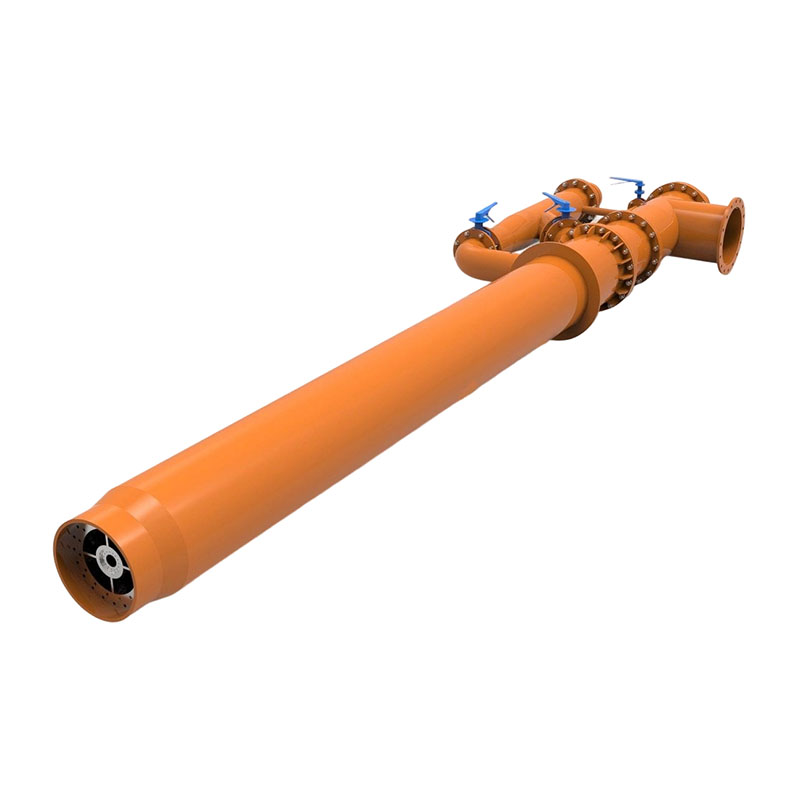
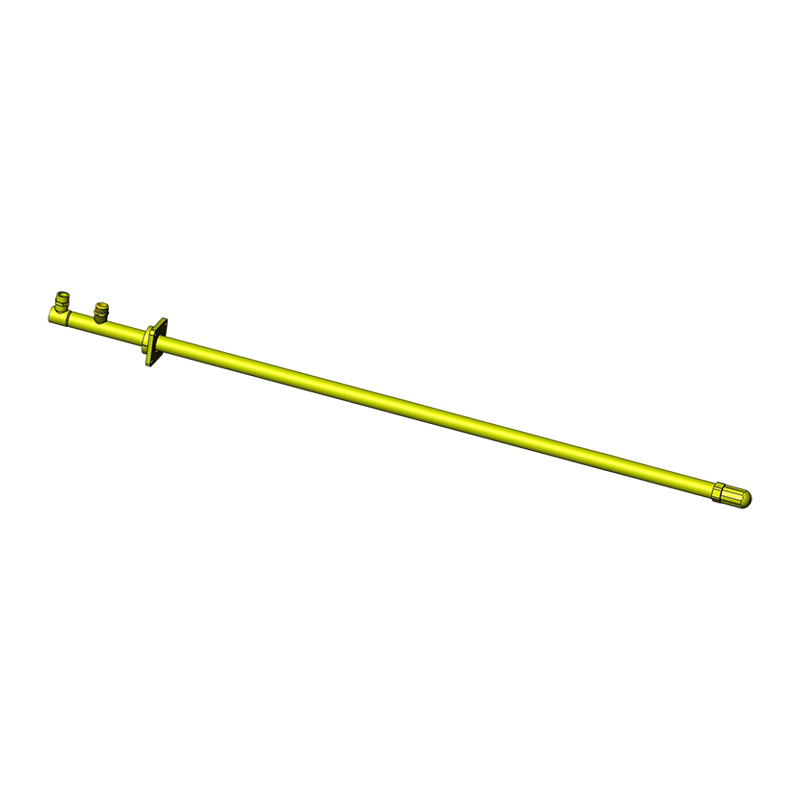
That is why burner adjustment and laser diagnostics are usually worth doing in the same window. If a hot band moves when you change primary air or shift the axial-to-swirl split, the cause is thermal, not structural. If a station keeps the same ovality no matter how the flame is set, you are probably looking at a tire, roller or shell issue. Testing this only works when the flame shape can be adjusted and repeated on demand, which is the design intention behind our 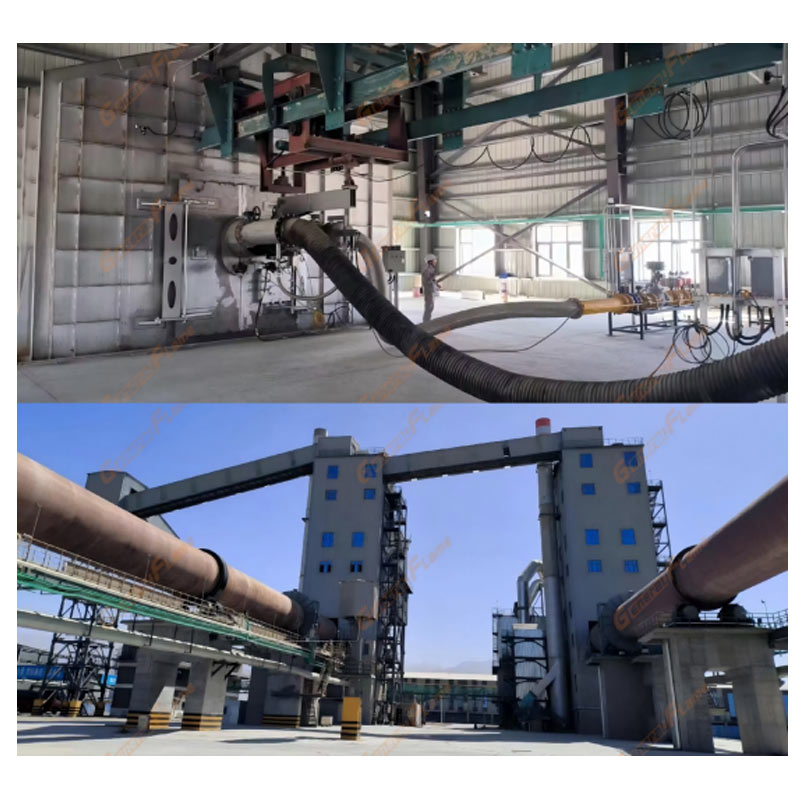 GeneralFlame Adjustable Rotary Kiln Burner with Precise Flame ControlThis burner's adjustable Laval nozzle and swirl generator enable precise flame control, supporting the repeatable adjustment needed for laser diagnostics.View Product →.
Laser diagnostics are only worth the cost if the report ends in decisions. In practice, the outputs feed into a few familiar actions:
Fuel changes deserve their own mention. When a plant moves to alternative or mixed fuels, the flame radiates differently and the shell temperature map shifts with it, so a second survey after the change is a cheap way to confirm the shell is coping. Multi-fuel firing is now normal rather than exotic, and the equipment has to be matched to the kiln, not just to the fuel list, which is how we approach our  GeneralFlame Multiple Fuel Co-combustion Burner for Rotary KilnsThis multi-fuel co-combustion burner uses an adjustable Laval nozzle and variable-pitch swirl generator to provide fuel adaptability when plants switch to alternative or mixed fuels.View Product →.
It is worth being honest about the limits. A laser survey measures geometry, not causes.
Used that way, a laser survey becomes a maintenance planning tool rather than a one-off report.
Kiln shell laser diagnostics answer one specific question: how is the shell behaving as it turns? That answer is most valuable when it is fed back into operation, into how the kiln is fired, how the lining is planned and how the mechanical components are adjusted.
We build rotary kiln burners and combustion systems for cement, lime, nickel, lithium, zinc oxide, pellet and waste-processing lines, and we spend a lot of time on site listening to shell problems. If your last survey showed a hot band, an ovality value that crept upward, or an axis that will not stay where you put it, the combustion side of the kiln is worth reviewing at the same time. Our kiln combustion management system projects and the wider industrial furnace and combustion technology work we deliver both start from the same place: measure first, then change something.


 OEM/ODM High-Performance Combustion & Thermal Equipment Manufacturers
 English
 русский
 Français
 Español
 عربى