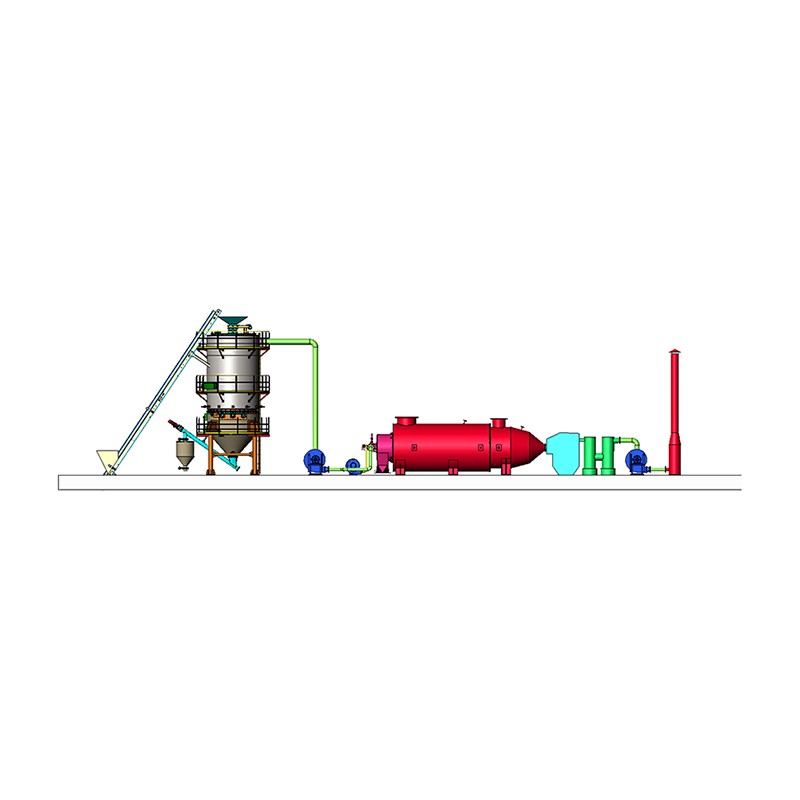
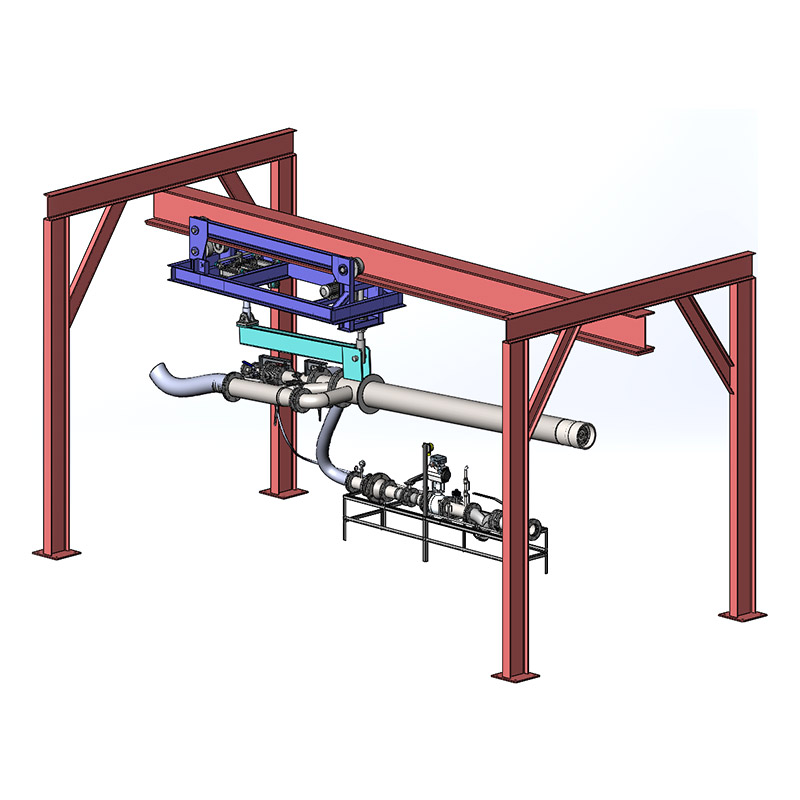
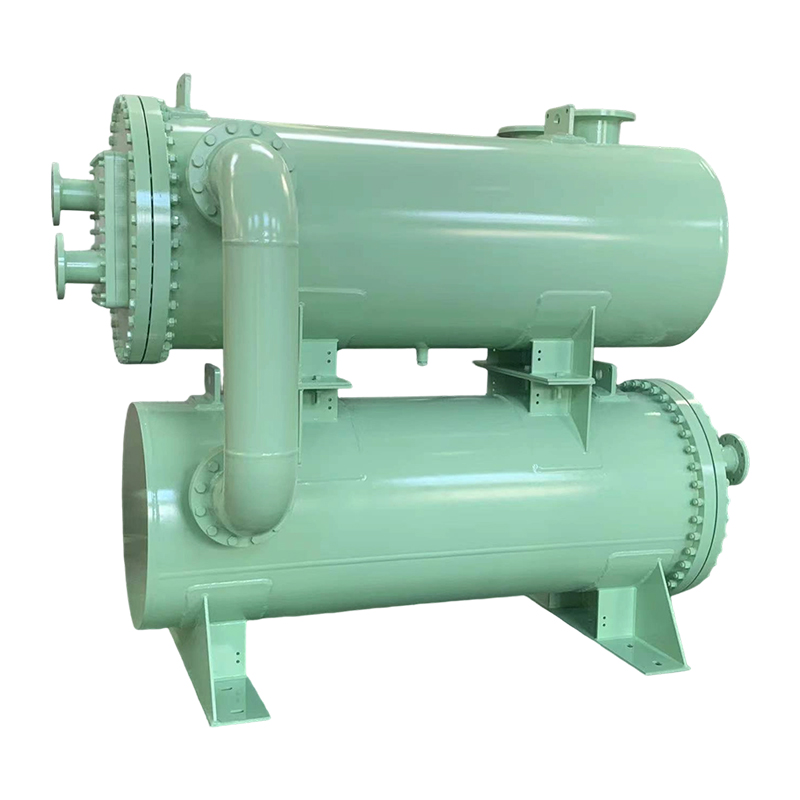
The core of the biomass gasifier from Jiangsu Jufeng Thermal Technology Co., Ltd. is thermochemical conversion. It doesn’t burn the fuel directly. Instead, it keeps the oxygen supply very low so the solid biomass first undergoes pyrolysis and then reduction in an oxygen-starved environment, ending up as a combustible gas.
The furnace has four zones, from top to bottom. At the top is the drying zone, at roughly 100-200°C, where moisture in the feedstock evaporates. Below that is the pyrolysis zone, at 200-500°C, where the biomass breaks down and releases tar, wood vinegar, and various volatile gases, leaving fixed carbon behind. Next comes the oxidation zone, the hottest part at about 700-1200°C. Some of the volatiles and fixed carbon react with oxygen here and release a large amount of heat, which powers the endothermic reactions further down. At the bottom is the reduction zone, where carbon reacts with steam and hydrogen in the water-gas and methanation reactions, producing combustible gases such as carbon monoxide and methane. This completes the gas production process.
By-products are the biggest headache during operation. Tar condenses on the walls in cooler areas and can clog the piping, so it is generally removed by catalytic cracking or water scrubbing. Alkali metals in the feedstock tend to cause slagging in the furnace at high temperatures and can disturb the gas flow inside, hurting operational stability. Jufeng’s gasifier is equipped with an automatic ash discharge system and online temperature monitoring, which adjust operating conditions in real time to keep the equipment running smoothly.


 OEM/ODM High-Performance Combustion & Thermal Equipment Manufacturers
 English
 русский
 Français
 Español
 عربى