Content
Few questions in modern heating are more practical than how air source heat pumps work. As engineers who spend our days designing combustion systems for industrial kilns and furnaces, we appreciate the elegance of a technology that moves heat instead of creating it. This guide breaks down the operating principle, the components, the efficiency numbers, and the situations where a heat pump makes sense.
At its core, an air source heat pump is a device that transfers thermal energy between the outside air and the interior of a building. In winter, it extracts heat from outdoor air and delivers it indoors. In summer, it reverses the direction and removes heat from the indoor air, sending it outside. The term "air source" simply means that the outside air serves as the heat reservoir.
The physics that makes this possible is the vapour-compression cycle. A refrigerant fluid evaporates at low pressure, absorbing heat; then it is compressed to high pressure and temperature; then it condenses, releasing heat; and finally it expands back to low pressure. This cycle repeats continuously, and the heat pump only uses electricity to run the compressor, fans, and controls. The ratio of useful heat delivered to electricity consumed is what makes heat pumps remarkable.
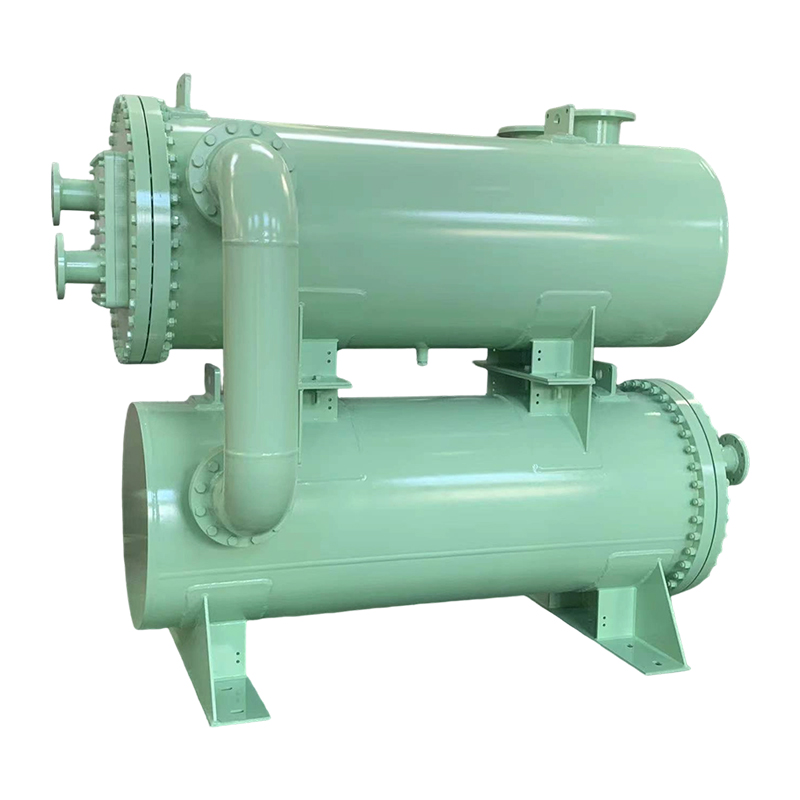
Every air source heat pump contains four main components:
In heating mode, the outdoor coil is the evaporator and the indoor coil is the condenser. In cooling mode, a reversing valve swaps the roles, making the indoor coil the evaporator and the outdoor coil the condenser.
When it's freezing outside, you may wonder where the heat comes from. Even at -10°C, air molecules still contain thermal energy. The refrigerant in the evaporator is colder than the outside air, so heat naturally flows from the air to the refrigerant. The compressor then increases the temperature of that refrigerant to a level high enough to heat the indoor space. This is why an air source heat pump can extract useful heat from air that feels cold.
As a practical example, if the outside air is 0°C and the evaporator operates at -10°C, the refrigerant will absorb heat. After compression, the gas temperature might reach 40–60°C, which is enough for radiators, fan coils, or underfloor heating.
The same equipment works as an air conditioner in summer. The refrigerant absorbs heat from indoor air at a low temperature, the compressor raises its temperature higher than the outdoor air, and the outdoor coil releases that heat. This is simply the reverse of the winter cycle. The efficiency of this mode is rated by SEER (Seasonal Energy Efficiency Ratio), while heating efficiency is rated by HSPF (Seasonal Heating Performance Factor) or COP (Coefficient of Performance).
When people ask how air source heat pumps work, they often really want to know how much energy they will save. To answer that, manufacturers publish standardised metrics.
| Metric | What It Measures | Typical Range |
|---|---|---|
| COP | Instantaneous heating efficiency at a fixed temperature | 2.5 – 4.5 |
| HSPF | Seasonal heating efficiency over a whole season | 8 – 13 |
| SEER | Seasonal cooling efficiency over a whole season | 14 – 25 |
A COP of 3 means that for every unit of electricity consumed, the heat pump delivers three units of heat. That is fundamentally different from a combustion heater, which cannot exceed 1 unit of useful heat for every unit of fuel energy unless it uses condensing technology and approaches 90–95% thermal efficiency.
Older air source heat pumps lost output and efficiency as the outdoor temperature dropped. Modern cold-climate models use variable-speed compressors, enhanced vapour injection, and smarter defrost cycles to maintain useful performance even at -25°C. They can still produce enough heat for well-insulated homes in many Canadian and Nordic regions. However, their efficiency does degrade at very low temperatures. In extremely cold climates, a hybrid system that pairs a heat pump with a backup furnace or boiler can be the most practical answer.
As a company that designs burners for industrial kilns, we are often asked whether heat pumps will replace combustion heating. The honest answer is that they serve very different temperature ranges. Air source heat pumps are ideal for space heating, domestic hot water, and low-temperature process heating up to about 60–80°C. Combustion systems, on the other hand, remain essential for any process that needs intense heat above 150°C, such as roasting, smelting, calcining, or steam generation. Even in a decarbonised world, chemistry does not change: you need a flame to reach 1000°C in a rotary kiln combustion system.
This distinction matters when you evaluate green heating strategies. A heat pump can dramatically reduce emissions for buildings and low-temperature industrial loads. But for the high-temperature core of a process plant, a high-efficiency low-NOx burner is still the workhorse. Here is one of our dedicated low-emission products for such applications.
 GeneralFlame Low-NOx Burner for High-Temperature Industrial ProcessesThis burner keeps NOx under 30 mg/m³ while reaching 98% efficiency, making it a reliable choice for kilns and furnaces where heat pumps fall short.View Product →
In our own work, we have seen the same thermodynamic discipline apply to both technologies. Whether you are compressing a refrigerant or accelerating a flame, every degree of temperature change and every joule of heat transfer must be accounted for. That experience directly supports the way we balance efficiency, reliability, and environmental performance in thermal systems.
If you are evaluating an air source heat pump for a home or commercial building, keep these points in mind:
For industrial operators, the takeaway is different. While a heat pump may not replace a process burner, it can capture waste heat and upgrade it to a usable temperature. Some plants combine heat pumps with heat recovery loops to pre-heat combustion air or boiler feedwater. This is where thermal expertise pays off. We have seen energy savings grow substantially when engineers think of the whole energy chain rather than one isolated equipment.
The transition to cleaner heating is not a simple swap of one device for another. It requires system-level thinking. For example, a biomass gasifier can turn agricultural residue into a clean fuel that a high-efficiency burner then uses for drying or calcination. An air source heat pump can then handle the low-temperature part of the same facility. These technologies are not enemies; they are complementary tools in the toolbox.
 GeneralFlame Biomass Gasifier for Converting Waste into Clean FuelWith 75-82% thermal efficiency and fuel flexibility, this gasifier turns agricultural residue into syngas, complementing heat pumps in a hybrid heating system.View Product →
At Jiangsu Jufeng Thermal Technology, we have spent years developing combustion and gasification equipment for rotary kilns, smelting furnaces, and waste-to-energy lines. Our experience makes us comfortable explaining not only how a flame behaves at high temperature, but also how a refrigerant cycle moves low-temperature heat. The same fundamental laws govern both.
If you would like to explore how our high-efficiency industrial heating solutions can support your energy transition, we are happy to share the details. And if your question is purely about heat pumps, we will point you to the right resources because good engineers know the limits of their own equipment.
Understanding how air source heat pumps work comes down to a simple insight: the technology manages the location of heat, not the creation of it. For buildings and moderate-temperature processes, that makes heat pumps an outstandingly efficient choice. For high-temperature industrial tasks, combustion still leads the way. A good thermal strategy knows which tool fits which part of the problem, and that is the kind of judgement we bring to every system we design.


 OEM/ODM High-Performance Combustion & Thermal Equipment Manufacturers
 English
 русский
 Français
 Español
 عربى