Content
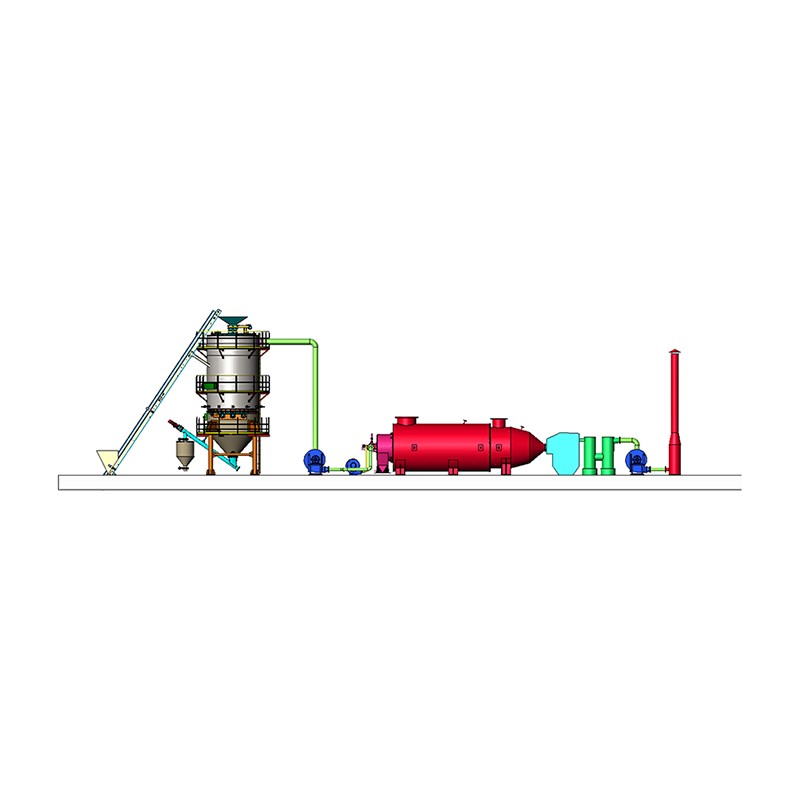
A biomass gasifier is a thermochemical reactor that converts solid organic materials — such as wood chips, agricultural residues, rice husks, or municipal solid waste — into a combustible gas mixture called syngas (synthesis gas). This conversion occurs at high temperatures, typically between 700°C and 1,200°C (1,292°F–2,192°F), in a controlled, oxygen-limited environment. The resulting syngas is composed primarily of carbon monoxide (CO), hydrogen (H₂), methane (CH₄), carbon dioxide (CO₂), and nitrogen (N₂), and can be used directly for heat, electricity generation, or as a chemical feedstock.
Unlike combustion, which burns fuel completely to produce heat and exhaust gases, gasification converts the energy locked in solid biomass into a versatile gaseous fuel with 60–80% cold gas efficiency in well-designed systems. This makes biomass gasifiers a key technology in renewable energy, waste reduction, and rural electrification strategies worldwide.
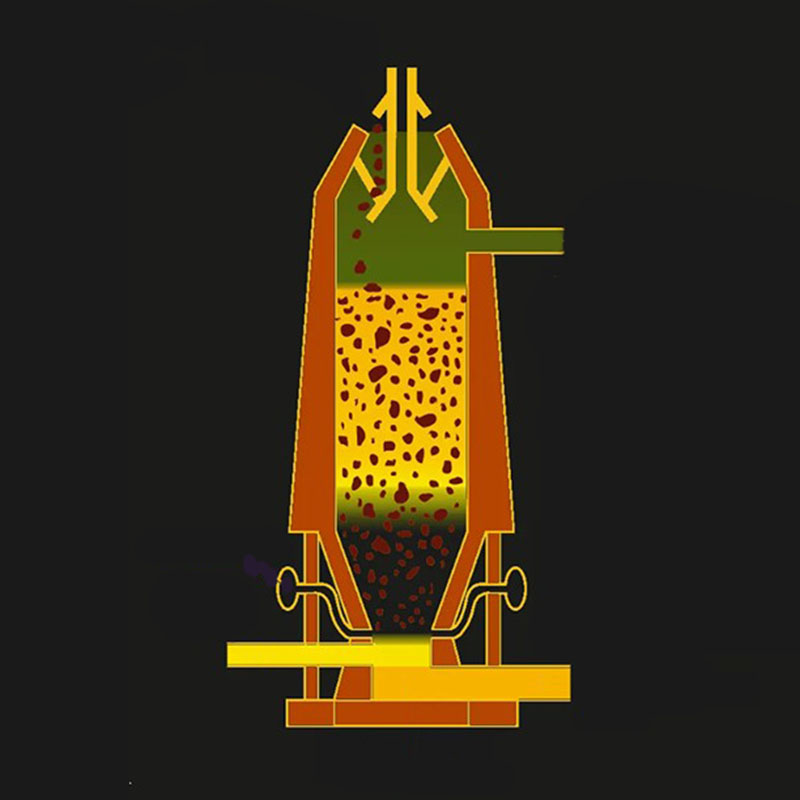
Gasification is not a single reaction but a sequence of overlapping thermochemical stages. Understanding these stages clarifies why gasifier design, temperature control, and feedstock preparation all matter critically to output quality.
As biomass enters the gasifier, moisture is driven off at temperatures up to 200°C. Feedstock moisture content must ideally be below 20% by weight; wet feedstock above 30% moisture significantly lowers syngas quality and cold gas efficiency. This is why pre-drying is a standard step in industrial biomass gasification plants.
Between 200°C and 700°C, biomass thermally decomposes in the absence of oxygen into volatile gases (CO, H₂, CH₄, tars), char (solid carbon), and ash. This stage liberates roughly 70–80% of the organic matter as volatiles, leaving behind a carbon-rich char that participates in later reactions.
A controlled, sub-stoichiometric amount of air, oxygen, or steam is introduced as the gasifying agent. Partial combustion of char and volatiles occurs, generating the heat needed to sustain all other reactions. Temperatures in this zone reach 900°C–1,200°C. The equivalence ratio (ER) — the ratio of actual air supplied to the stoichiometric air requirement — is typically maintained at 0.20–0.35 for biomass gasification.
In the reduction zone, hot char reacts with CO₂ and H₂O (steam) through endothermic reactions to produce CO and H₂ — the primary combustible components of syngas. The key reactions are:
The resulting syngas from an air-blown downdraft gasifier typically contains 18–22% CO, 15–20% H₂, 1–5% CH₄, 9–12% CO₂, and the remainder nitrogen, yielding a lower heating value (LHV) of approximately 4–6 MJ/Nm³.
Gasifier design determines feedstock flexibility, tar production, syngas quality, and scalability. Each configuration has a distinct operational logic and target application.
Biomass is fed from the top and the gasifying agent enters from the bottom, moving upward (counter-current flow). The syngas exits from the top and passes through the pyrolysis zone, picking up large quantities of tars — typically 30–150 g/Nm³. While updraft gasifiers tolerate high-moisture feedstock (up to 60%) and have high thermal efficiency, the high tar content makes syngas cleanup expensive and limits applications to direct combustion in boilers rather than engine use.
Both biomass and the gasifying agent flow downward (co-current), and syngas passes through the high-temperature oxidation zone before exiting. This configuration thermally cracks most tars, resulting in syngas with very low tar content of 0.5–5 g/Nm³ — clean enough to run internal combustion engines and gas turbines directly. Downdraft gasifiers are the most common type for small-to-medium scale power generation (10 kW to 1 MW) and are well-suited to uniform, low-moisture woody biomass.
A bed of inert material (sand or olivine) is fluidized by the gasifying agent, creating intense mixing and uniform temperature distribution throughout the reactor. Bubbling fluidized bed (BFB) and circulating fluidized bed (CFB) gasifiers handle a wide variety of feedstocks including agricultural residues, municipal solid waste, and high-ash materials that would block fixed-bed systems. They operate at 750°C–900°C and are scalable to 50 MW thermal and above, making them the preferred technology for large industrial and utility-scale biomass plants. Tar content is intermediate — typically 10–40 g/Nm³ — requiring downstream cleanup for engine applications.
Finely pulverized biomass (particle size <0.1 mm) is injected with oxygen or steam into a high-temperature, high-pressure reactor operating at 1,200°C–1,600°C and 20–80 bar. Residence times are very short (seconds), and the high temperatures destroy virtually all tars and hydrocarbons, producing a very clean, high-quality syngas suitable for Fischer-Tropsch synthesis of liquid fuels. Entrained flow gasifiers are primarily used for large-scale production of synthetic natural gas, methanol, or aviation fuels, and require significant feedstock preparation infrastructure.
| Gasifier Type | Typical Scale | Tar Content | Feedstock Flexibility | Best Application |
|---|---|---|---|---|
| Updraft Fixed-Bed | 10 kW–10 MW | 30–150 g/Nm³ | High (moisture tolerant) | Direct heat / boilers |
| Downdraft Fixed-Bed | 10 kW–1 MW | 0.5–5 g/Nm³ | Medium (uniform feedstock) | Engine / genset power |
| Bubbling Fluidized Bed | 1–50 MW | 10–40 g/Nm³ | High | CHP / industrial heat |
| Circulating Fluidized Bed | 10–300+ MW | 10–40 g/Nm³ | Very High | Utility-scale power |
| Entrained Flow | 50–1,000+ MW | <0.1 g/Nm³ | Low (fine particles only) | Synfuel / chemical production |
The choice of gasifying agent directly determines syngas composition, heating value, and operating cost. Each option involves meaningful trade-offs.
Not all biomass is equally suited for gasification. Feedstock properties — moisture content, ash content, particle size, and bulk density — determine which gasifier type is appropriate and what pre-treatment is needed.
A biomass gasifier is not a standalone technology — it is a core component in an energy system. Its value depends on how the syngas is ultimately used. The following applications represent the most commercially mature and rapidly growing uses:
Syngas from downdraft or fluidized bed gasifiers is cleaned and fed to spark-ignition engines or gas turbines to generate electricity. Combined heat and power (CHP) systems can achieve overall energy efficiencies of 70–85% when both electrical output (typically 25–35% electrical efficiency) and recovered heat are utilized. A 1 MW biomass gasification CHP plant consuming approximately 1,000 kg/hour of wood chips can supply electricity to roughly 800–1,000 households while providing process heat to an industrial facility.
Syngas can be burned directly in industrial furnaces, kilns, and dryers as a substitute for natural gas or diesel. Cement plants, brick kilns, and food processing facilities in India, Brazil, and Southeast Asia have deployed biomass gasifiers to reduce fossil fuel consumption by 40–80% on a thermal energy basis, with payback periods often under three years when diesel is displaced.
High-quality syngas (CO + H₂) from oxygen-blown or steam-blown gasifiers can be converted to liquid hydrocarbons via the Fischer-Tropsch process, producing synthetic diesel, jet fuel, or methanol. The European BioTfueL project and Sweden's GoBiGas plant have demonstrated this pathway at pilot and demonstration scale, with commercial-scale BTL plants targeting production costs of €0.80–1.20 per liter of synthetic diesel equivalent.
Steam gasification of biomass followed by a water-gas shift reactor and pressure swing adsorption (PSA) can produce hydrogen with a purity of 99.99%. When biomass with carbon capture and storage (BECCS) is integrated, the process can achieve net-negative carbon emissions — producing hydrogen while removing atmospheric CO₂. This pathway is attracting significant investment as part of national hydrogen strategies in the EU, UK, and Australia.
Small-scale biomass gasifier power plants (5–100 kW) have electrified thousands of villages in India, Cambodia, and sub-Saharan Africa where grid extension is uneconomical. India's Ministry of New and Renewable Energy (MNRE) has supported installation of over 500 biomass gasifier systems for decentralized power supply, each serving 50–200 households using locally available agricultural residues.
Raw syngas from a biomass gasifier contains contaminants that must be removed before use in engines, turbines, or chemical reactors. Tar is the most problematic contaminant — it condenses in pipes, filters, and engine valves, causing blockages and equipment damage.
Biomass gasification is widely recognized as a low-carbon energy technology when managed with sustainable biomass sourcing. Several environmental metrics demonstrate its advantages:
Despite their significant potential, biomass gasifiers face practical challenges that must be addressed for reliable, long-term operation at commercial scale.
Biomass is inherently heterogeneous. Variations in moisture, particle size, and chemical composition across batches cause fluctuations in syngas quality and gasifier temperature profiles. Establishing a reliable, year-round biomass supply chain within an economical transport radius (typically 50–100 km for low-density feedstocks) is often the most complex project development challenge.
Tar-related maintenance — cleaning heat exchangers, filters, and engine components — accounts for 30–40% of total operation and maintenance (O&M) costs in poorly optimized systems. Projects that underestimate tar management requirements frequently face unplanned downtime and cost overruns.
Gasifier performance demonstrated at pilot scale does not always translate linearly to larger systems. Flow dynamics, temperature gradients, and tar cracking efficiency change with reactor volume, requiring careful engineering validation at each scale. Several high-profile commercial-scale biomass gasification projects in Europe and North America have been abandoned or significantly delayed due to scale-up issues.
Installed capital costs for biomass gasification systems range from approximately $2,000–5,000 per kW of electrical output for small-scale systems and $1,500–3,000 per kW for large fluidized bed plants — higher than simple combustion systems of equivalent capacity. Syngas cleaning equipment (scrubbers, filters, catalytic reformers) typically accounts for 25–40% of total capital cost.
Selecting a biomass gasifier involves matching technology to feedstock, scale, and end-use application. The following decision criteria provide a practical framework:


 OEM/ODM High-Performance Combustion & Thermal Equipment Manufacturers
 English
 русский
 Français
 Español
 عربى
عربى