Content
A low NOx burner is a combustion device engineered to minimize the formation of nitrogen oxides (NOx) — primarily nitric oxide (NO) and nitrogen dioxide (NO₂) — during the burning of natural gas, oil, or other fuels. Unlike conventional burners that produce peak flame temperatures exceeding 1,800°C where thermal NOx forms rapidly, low NOx burners use design strategies such as staged combustion, flue gas recirculation (FGR), and lean premixing to keep localized flame temperatures below the critical threshold of approximately 1,500°C, suppressing NOx generation at the source.
In industrial furnace applications — including steel reheating furnaces, petrochemical process heaters, cement kilns, and glass melting tanks — low NOx burner systems can reduce emissions to below 30 mg/Nm³ (roughly 15 ppm), compared to 200–500 mg/Nm³ from uncontrolled conventional burners. This makes them the primary technical solution for meeting increasingly strict air quality regulations worldwide.
NOx is not a single compound but a family of reactive nitrogen gases formed whenever fuel burns at high temperatures in the presence of atmospheric nitrogen. Their impact extends well beyond the furnace stack:
Industrial furnaces represent one of the largest stationary NOx source categories globally. The International Energy Agency estimates that industrial combustion accounts for over 20% of global anthropogenic NOx emissions, making low NOx burner technology a central tool in industrial decarbonization and air quality strategies.
Understanding NOx formation pathways is essential for selecting the right low NOx technology. Each pathway responds differently to burner design interventions:
| NOx Type | Formation Mechanism | Critical Temperature | Primary Control Method |
|---|---|---|---|
| Thermal NOx | N₂ + O₂ react at high temps (Zeldovich mechanism) | >1,500°C; rises exponentially above 1,600°C | Flame temperature reduction via staging or FGR |
| Prompt NOx | Hydrocarbon radicals react with N₂ in fuel-rich zones | Forms at lower temps; less temperature-dependent | Lean premixing; limiting fuel-rich combustion zones |
| Fuel NOx | Nitrogen compounds in fuel oxidize during combustion | Relevant at all temperatures; fuel-dependent | Staged air injection; reburning techniques |
For most natural gas-fired industrial furnaces, thermal NOx dominates, making flame temperature control the primary engineering target. Fuel NOx becomes significant in heavy fuel oil, coal, or refinery gas applications where fuel-bound nitrogen content can exceed 0.5% by weight.
Modern low NOx industrial burners combine one or more of the following proven combustion engineering strategies, often in an integrated design tailored to the specific furnace type and fuel:
Staged combustion divides the combustion process into two or more sequential zones. In air staging, primary combustion occurs in a fuel-rich, oxygen-deficient zone that suppresses NOx; secondary air is introduced downstream to complete combustion. In fuel staging (reburning), a secondary fuel injection zone creates reducing conditions that chemically break down NOx already formed. Air staging alone can achieve NOx reductions of 40–60% versus conventional burners.
FGR routes a portion of cooled exhaust gases (typically 10–30% of total flue gas volume) back into the combustion air stream. The recirculated gas dilutes oxygen concentration and increases the heat capacity of the reactant mixture, both of which reduce peak flame temperature. FGR is particularly effective in high-temperature furnaces and can reduce NOx by an additional 50–70% when combined with staging. It is the dominant strategy in process heaters and steam reformers operating above 900°C.
In lean premix burners, fuel and air are thoroughly mixed before ignition at a fuel-to-air equivalence ratio well below stoichiometric (typically λ = 1.3–1.8). The uniform, lean mixture burns at a significantly lower flame temperature than diffusion flames, producing ultra-low NOx levels — as low as 5–9 ppm in optimized systems. This approach is standard in gas turbine combustors and is increasingly applied to industrial process burners where turndown ratio and flashback risk can be managed.
Flameless oxidation (FLOX) or Moderate and Intense Low-oxygen Dilution (MILD) combustion eliminates the visible flame entirely by recirculating large volumes of hot flue gases internally within the furnace chamber. Reactants are highly diluted before ignition, producing distributed, volumetric heat release at near-uniform temperatures. NOx emissions from FLOX systems can be below 10 mg/Nm³ (5 ppm), making them the lowest-emission technology available for high-temperature industrial furnaces above 850°C. They are widely used in steel reheating and aluminum melting applications.
While not a burner design technology per se, SCR is frequently integrated into industrial furnace low NOx systems as a secondary treatment. Ammonia or urea is injected into the flue gas stream, and over a catalyst bed at 300–400°C, NOx is converted to harmless N₂ and water. SCR can achieve 90–95% NOx removal efficiency but adds capital cost ($500–$2,000 per kW of thermal input) and requires ongoing reagent supply.
The following table summarizes typical NOx performance, applicable furnace types, and key trade-offs for each major low NOx technology used in industrial settings:
| Technology | Typical NOx Output | NOx Reduction vs. Conventional | Best-Suited Furnace Type | Key Trade-Off |
|---|---|---|---|---|
| Conventional burner (baseline) | 200–500 mg/Nm³ | — | — | High NOx; non-compliant |
| Staged air burner | 80–150 mg/Nm³ | 40–60% | Boilers, process heaters | CO increase if poorly tuned |
| Staged air + FGR | 30–80 mg/Nm³ | 70–85% | Refinery heaters, steam reformers | FGR fan energy cost; fouling risk |
| Lean premix burner | 10–30 mg/Nm³ | 85–95% | Gas turbines, low-temp process furnaces | Narrow turndown; flashback risk |
| FLOX / MILD combustion | <10 mg/Nm³ | >95% | Steel reheating, aluminum melting | Requires preheat temp >850°C to sustain |
| Low NOx burner + SCR | <5 mg/Nm³ | >98% | Cement kilns, large combustion plants | High capital and operating cost |
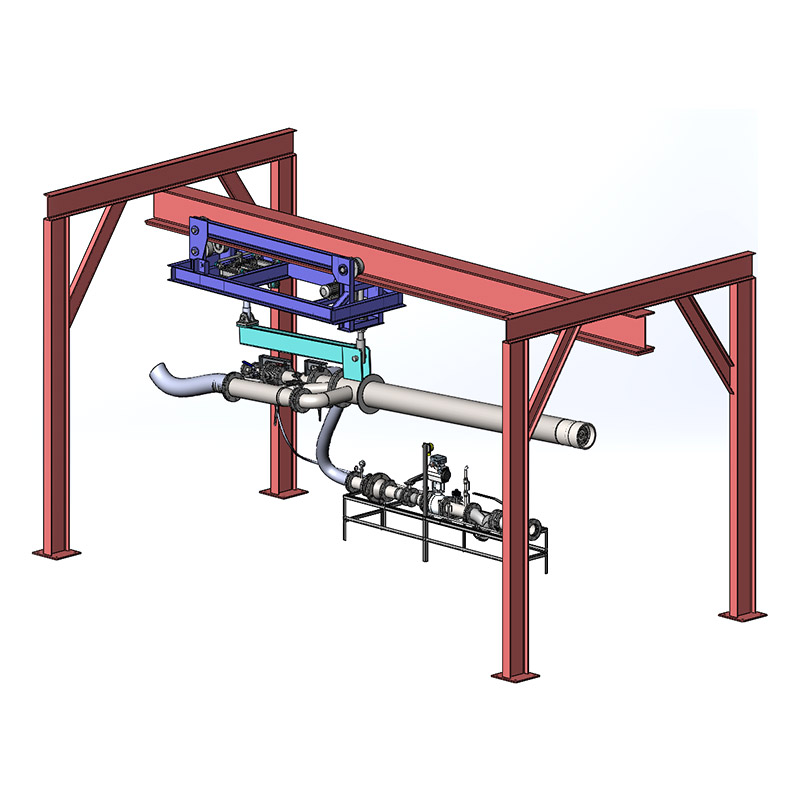
A complete industrial furnace low NOx burner system is not just the burner head — it is an integrated assembly of hardware and controls. Understanding each component helps engineers specify, procure, and maintain the system correctly:
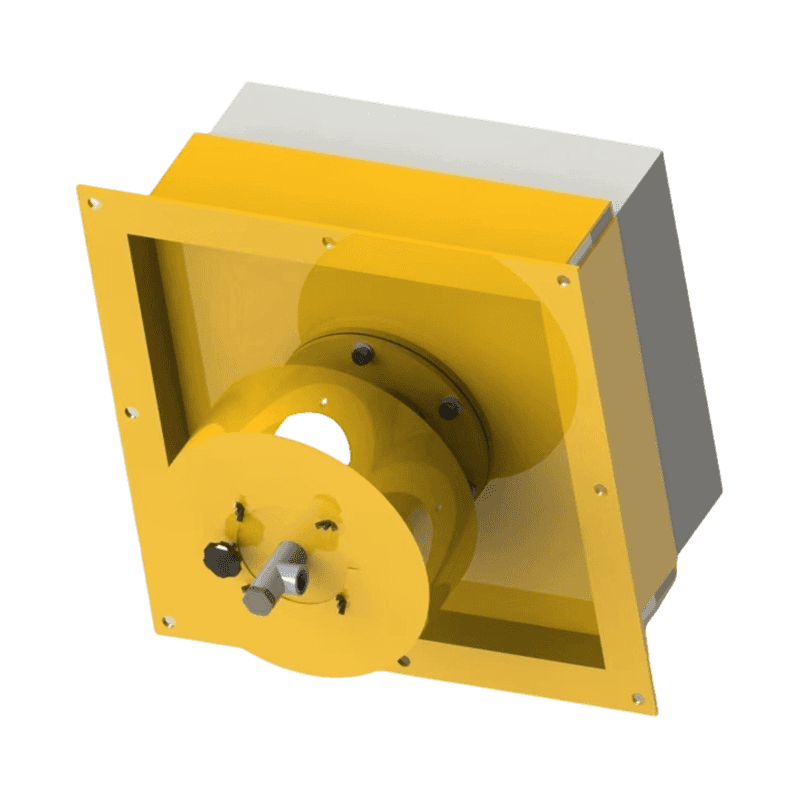
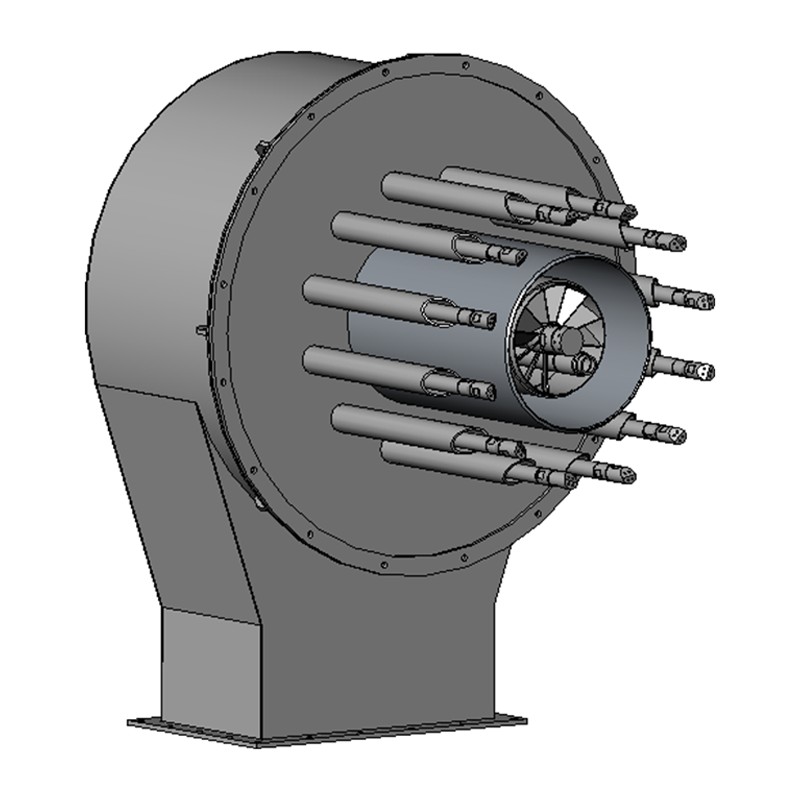
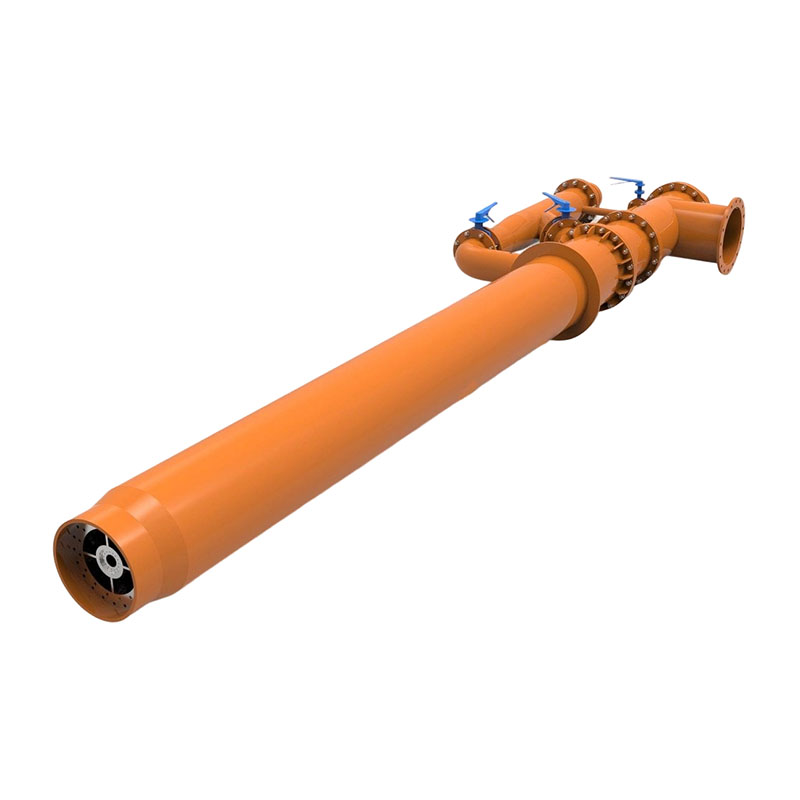
The burner body contains the fuel and air injection nozzles, swirler or jet arrangement, and pilot assembly. The refractory quarl (burner tile) shapes the recirculation pattern and stabilizes the flame. In FLOX burners, the quarl is designed to maximize internal flue gas entrainment before ignition occurs.
Includes combustion air fans, air preheaters (recuperators or regenerators), and damper control valves. In FGR systems, a separate recirculation duct and fan draw flue gas from the stack and inject it into the combustion air stream. Variable frequency drives (VFDs) on combustion air fans allow precise air flow modulation across the full burner turndown range (typically 5:1 to 10:1).
Safety-rated fuel trains include pressure regulators, safety shutoff valves (SSOV), manual isolation valves, and flow control valves — all sized to applicable codes (EN 746, NFPA 86, or EN 1643). In staged fuel systems, separate control valves govern primary and secondary fuel flows independently to maintain the desired staging ratio across load changes.
The BMS is a safety-rated programmable logic controller (PLC) or dedicated safety relay system that executes the startup, shutdown, and safety interlock sequences. It monitors flame presence via UV or ionization sensors, manages purge cycles, and initiates safety shutdowns if abnormal conditions are detected. Modern BMS platforms comply with IEC 61508 SIL 2 or SIL 3 standards for functional safety in industrial combustion.
Continuous Emissions Monitoring Systems (CEMS) measure O₂, CO, and NOx in real time. In closed-loop trim control configurations, NOx readings are fed back to the air/fuel ratio controller, which automatically adjusts FGR rate or staging split to maintain target emissions within permitted limits — a feature increasingly mandated by regulators for installations above 50 MW thermal input.
Low NOx burner technology is applied across a broad range of industrial furnace and heater types, each with specific combustion challenges:
Choosing the appropriate low NOx burner system requires evaluating multiple site-specific parameters. Specifying engineers and plant managers should work through the following selection criteria:
Regulatory pressure is the primary market driver for low NOx industrial burner adoption. Key frameworks that industrial operators must navigate include:
| Region / Authority | Regulation | NOx Limit | Scope |
|---|---|---|---|
| European Union | Industrial Emissions Directive (IED) / BREF | 50–200 mg/Nm³ (sector-dependent) | Large combustion plants >50 MWth |
| United States (federal) | EPA NESHAP / NSPS | 0.04–0.10 lb/MMBtu (≈30–75 ppm) | Industrial boilers and process heaters |
| California (SCAQMD) | Rule 1146 / 1146.1 | 9 ppm (large boilers >2 MMBtu/hr) | Industrial and commercial boilers |
| China | GB 13271 / GB 9078 | 150–200 mg/Nm³ (key emission zones: 100 mg/Nm³) | Industrial boilers and furnaces |
| India | MoEFCC Emission Standards | 300–600 mg/Nm³ (tightening under review) | Thermal power and large industrial plants |
Operators upgrading to low NOx burner systems often encounter implementation challenges. The following are the most frequently reported issues and how experienced system designers resolve them:
Reducing NOx through fuel-rich staging or reduced excess air can increase carbon monoxide (CO) emissions if combustion is not completed downstream. Modern low NOx burners address this through optimized secondary air jet placement and combustion modeling (CFD) to ensure complete burnout before the flue gas exits the furnace. Typical compliant systems achieve CO below 100 ppm while maintaining NOx compliance simultaneously.
Lean premix burners are susceptible to flame instability (oscillations, flashback, or blowout) at low firing rates. Solutions include dual-mode burner designs that switch from premix to diffusion flame operation at turndown below 30% load, maintaining stability while still achieving low NOx at full and mid-range firing rates.
Low NOx burners produce longer, more distributed flames than conventional designs. In furnaces with tight dimensional constraints or specific heat flux profiles, this can affect product heating uniformity. CFD-assisted burner arrangement and zone control strategies — using multiple smaller burners rather than fewer large ones — are standard solutions that maintain both NOx compliance and process quality.


 OEM/ODM High-Performance Combustion & Thermal Equipment Manufacturers
 English
 русский
 Français
 Español
 عربى
عربى