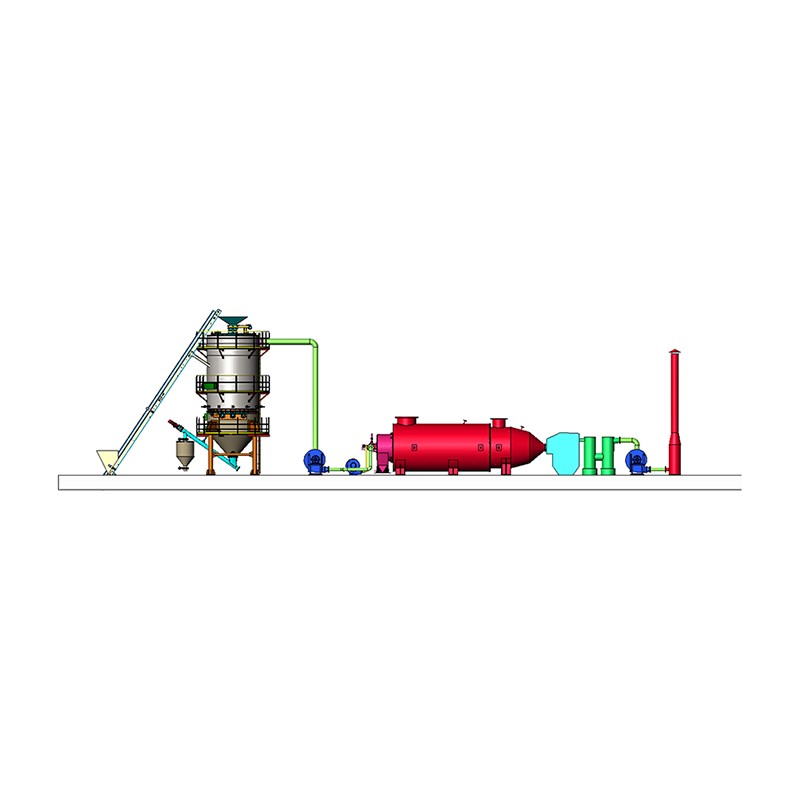
The consumption of traditional fossil fuels has brought about problems such as energy shortage and pollution. Biomass fuel, due to its energy conservation, environmental protection and renewability, has become an important choice to replace traditional fuels, and its carbon emissions are much lower than those of coal and oil.
There are two main ways for biomass to replace traditional fuels. One is direct combustion, that is, grinding biomass into small particles and putting them into kilns as fuel, equipped with a conveying and metering system. The other is to convert biomass into biogas through a gasifier.
A gasifier uses gasification and pyrolysis technology to decompose biomass into combustible gases such as carbon monoxide and hydrogen in a high-temperature and oxygen-deficient environment. After purification treatment, it can be used as industrial raw materials, with higher utilization rate and fewer pollutant emissions. Both methods are easy to operate and cost-controllable, helping to achieve the goals of energy structure optimization and environmental protection.


 OEM/ODM High-Performance Combustion & Thermal Equipment Manufacturers
 English
 русский
 Français
 Español
 عربى
عربى