Content
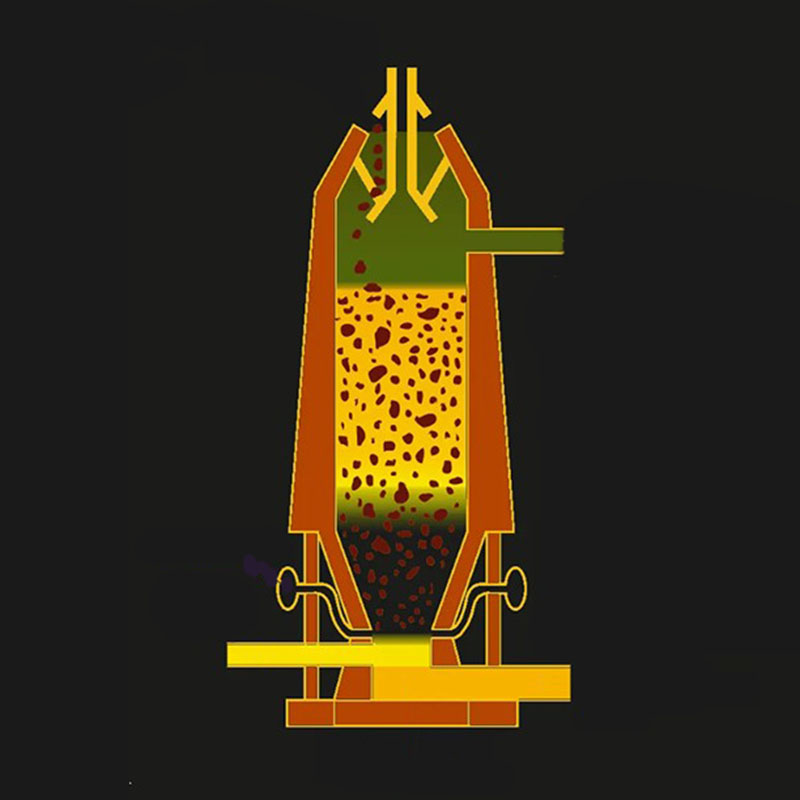
A Hot Blasting Furnace is an ironmaking blast furnace supplied with air that has been preheated — typically to 900–1,300°C — before being blown into the furnace through nozzles called tuyeres, rather than being fed room-temperature ("cold blast") air. The preheating itself happens in a separate piece of equipment called a hot blast stove (also known as a Cowper stove), and the resulting heated air is what's referred to as the "hot blast." Almost every blast furnace operating today uses this system, because preheated air dramatically cuts fuel consumption and boosts output compared with the cold-blast furnaces used before the 1830s.
The distinction matters because hot blast isn't just a minor tweak — it's one of the handful of innovations that made large-scale, coke-fueled ironmaking economically viable in the first place. Blast furnaces fed with air preheated to 900–1,250°C can generate smelting temperatures of about 1,650°C, significantly reducing the consumption of coke per ton of iron produced. Understanding how the hot blast system works — and why the temperature of that air matters so much — is the key to understanding modern blast furnace efficiency.
The hot blast furnace system is built around two connected pieces of equipment working together: the blast furnace itself, where the smelting reaction happens, and the hot blast stove(s), where the air is heated before it ever reaches the furnace.
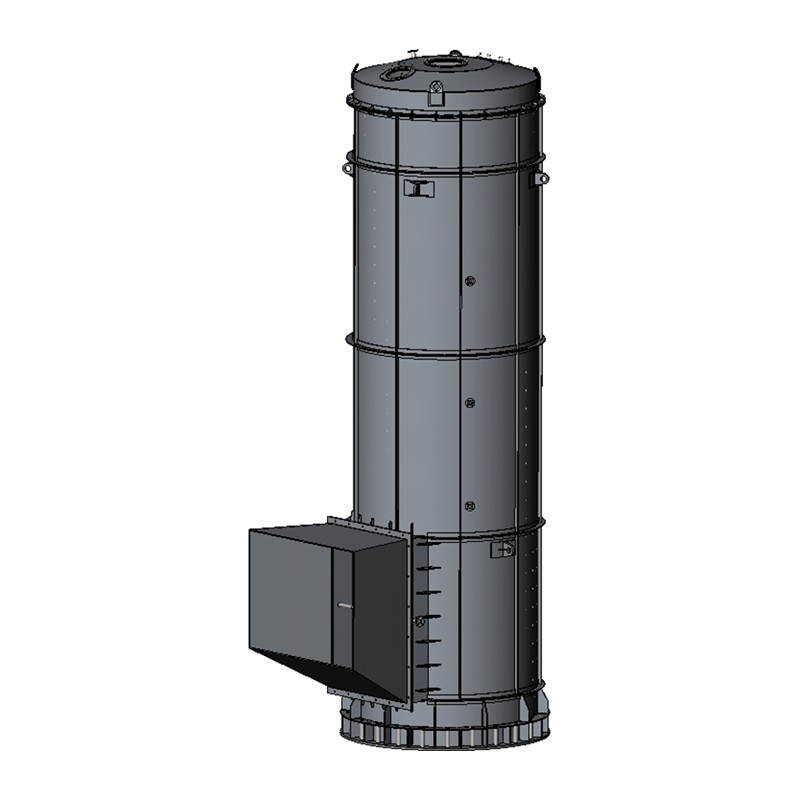
The stove is essentially a vertical cylindrical steel shell lined with firebrick, with the interior separated into two chambers: a combustion chamber, where gases from the blast furnace and other fuel sources are burned, and a regenerative chamber filled with a checkerwork of refractory brick heated by the burned gas. These refractory "checker bricks" are the heat-storage medium — they soak up heat during combustion and release it later as fresh air is pushed through them.
A hot blast stove doesn't run continuously in one mode — it alternates between two phases. During the on-gas (firing) period, fuel gas is combusted to heat up the checker brick thermal storage; during the on-blast period, air is heated by flowing it through that thermal storage. During the on-blast discharge period, fresh air is driven by a fan at elevated pressure across the heated bricks, and after being heated to as much as 1,200°C, this air — now called hot blast — is fed into the bottom of the blast furnace for iron ore smelting.
Because one stove can't be heating gas and heating air at the same time, most blast furnaces are served by three stoves: while two are being heated, the air blast passes through the regenerative chamber of the third stove on its way into the blast furnace. This rotation is what allows the blast furnace to receive a continuous, uninterrupted supply of hot air around the clock.
The heated air travels from the stove to the furnace via a bustle pipe, which distributes it to the hot-blast nozzles, or tuyeres, mounted around the base of the furnace. Because the hot blast temperature needs to be kept constant for good furnace efficiency, and the temperature naturally falls as a stove cools down, the hot blast is mixed with a controlled proportion of cold blast in a mixing chamber to hold the delivery temperature steady even as an individual stove's stored heat is being used up.
Hot blast isn't a modern invention — it dates to the early 19th century and represents one of the pivotal breakthroughs in industrial ironmaking history. Until the 1820s, cold air was actually thought to produce better-quality iron than hot air, largely because the reduced moisture in cool winter air was seen as beneficial.
Hot blast was invented and patented for iron furnaces by James Beaumont Neilson in 1828 at Wilsontown Ironworks in Scotland. Neilson found that by increasing the blast temperature to just 300°F (149°C), he could reduce fuel consumption from 8.06 tons of coal to 5.16 tons per ton of iron produced, with further reductions achievable at higher temperatures. The results were dramatic and quickly verifiable at scale: documented figures from the Clyde Iron Works between 1829 and 1833 show cold-blast coke smelting used 8.2 tonnes of coal per tonne of iron and produced 37.5 tonnes of pig iron per furnace per week, while hot blast with coke cut coal use to 5.3 tonnes and raised output to 54.9 tonnes per week.
Neilson's original equipment had real limitations. The cast iron pipes supported within a brick oven had different expansion characteristics, resulting in several cracked pipes, and the delivery equipment used solid tuyeres and flexible leather joints that could not withstand the high temperatures. It wasn't until 1860 that Englishman Edward Alfred Cowper invented the first successful hot-blast stove — the regenerative, checker-brick design that, in refined form, is still the industry standard today. The rapid adoption that followed was striking: hot blast was in general use throughout Great Britain by 1835, just seven years after Neilson's original discovery.
| Furnace Type | Coal Used per Tonne of Iron | Pig Iron Output per Week |
|---|---|---|
| Cold blast with coke | 8.2 tonnes | 37.5 tonnes |
| Hot blast with coke | 5.3 tonnes | 54.9 tonnes |
| Hot blast with coal | 3.0 tonnes | 62.2 tonnes |
The core reason hot blast works is straightforward thermodynamics: cold air entering a furnace has to be heated up by burning fuel inside the furnace before it can do anything useful, which wastes coke on simply raising the temperature of the incoming air. By preheating the air blast before it enters the furnace, heat input increases in the form of sensible heat that directly reduces the coke rate.
Modern research confirms the relationship holds at a very predictable rate. For every 100°C increase in hot blast outlet air temperature, the coke ratio of the blast furnace can be reduced by 4–7%, output can be increased by 3–5%, and coal injection capacity rises correspondingly. A separate industry estimate puts it in absolute terms: every 10°C increase in hot blast temperature at the bustle pipe reduces the blast furnace coke rate by approximately 4 to 6 kg per ton of hot metal.
This is also why hot blast has become essential rather than optional as furnace technology has advanced. Blast preheat of around 1,200°C is now considered essential when pulverized coal is being injected through the tuyeres, because hot air blast ensures faster heating, pyrolysis of the coal, and combustion of the resulting gaseous products.
Not all hot blast stoves are built the same way. According to the different layouts and structures of the combustion chamber and regenerator, hot blast stoves are generally divided into three basic structural forms: internal combustion, external combustion, and top combustion. Choosing between them is largely a question of how much floor space is available and what peak hot blast temperature the operation is targeting.
In an internal combustion design, the stove consists of a cylindrical refractory wall with an internal vertical partition wall that divides the single shell into a combustion chamber and a checker chamber containing the checker bricks. This is the more compact, traditional layout, but it comes with a structural limitation: the internal combustion chamber design with a division wall has a known weak spot at the corners of the combustion chamber.
External combustion stoves are composed of a separate checker chamber and combustion chamber, connected by a crossover rather than a shared internal wall. Separating the two chambers into distinct shells removes the corner-stress weak point of the internal design and generally supports higher peak temperatures.
A newer category of stove has no combustion chamber in the conventional sense at all — these are known as dome combustion stoves, shaft-less stoves, or Kalugin stoves. Overall, hot blast stove technology, especially the design and quality of its refractories, has undergone vast improvements in recent years, reaching a level of maturity that ensures a campaign life of over 30 years for a well-built stove.
Because different zones of the stove experience very different temperatures, no single refractory brick can be used throughout. Material selection is layered according to how hot each section of the checker chamber actually gets.
This layered approach — matching refractory grade to the actual heat each zone experiences — is what allows a single stove to safely handle a temperature gradient that spans hundreds of degrees from top to bottom.
Hot blast stoves save enormous amounts of coke, but they are themselves significant energy consumers — a fact often overlooked when evaluating overall blast furnace efficiency. The amount of blast furnace gas required by the stoves accounts for approximately 40% of total blast furnace gas output, and stove energy consumption can reach 25% of the plant's total energy consumption.
On a per-tonne basis, the numbers are equally telling: based on data from six efficient hot blast stove systems worldwide, the average total primary energy requirement is 1.8 GJ per tonne of hot metal for the hot blast stoves, compared with 11.6 GJ per tonne for the blast furnace itself. This means the stove system, while smaller in absolute energy terms than the furnace, still represents a meaningful and controllable share of total plant energy use — and one where efficiency gains translate directly into coke savings.
Practical improvements at operating plants have demonstrated this in real numbers rather than theory. Documented outcomes from stove-battery optimization at U.S. integrated steel producers include stove fuel rate reductions of 8 to 15 kg per ton of hot metal and hot blast temperature increases of 15°C to 30°C, translating into a coke rate reduction of roughly 6 to 12 kg per ton of hot metal.
For anyone operating or evaluating a hot blast furnace system, a handful of parameters consistently determine how well the stoves are performing and where efficiency is being gained or lost.


 OEM/ODM High-Performance Combustion & Thermal Equipment Manufacturers
 English
 русский
 Français
 Español
 عربى
عربى